A corner of a room is enough for sewing. The test of a small space is how quickly you can start and how quickly you can put everything away.
One solid work surface
The machine needs a sturdy table that does not wobble at full speed, about 40 inches wide so there is room for fabric on the left, at a height where your elbows are roughly level with the machine bed. See setting up a sewing table. Our sewing tables page lists folding and compact tables.
Store upward
Floor space is what a small room lacks. Use:
- Shelves above the table for thread, notions and boxes.
- A wall pegboard for scissors, rulers and the cutting mat.
- A rolling cart under or beside the table — a folding craft cart or a four-tier organizer for tools in use.
- Bins with labels for fabric and projects, on high shelves or under the bed.
Make the bulky things fold away
- Cutting: a large mat stored flat behind a door or under a bed, laid on the table when needed — see cutting space and surfaces.
- Pressing: a tabletop ironing board or a wool pressing mat instead of a full board.
- Fabric: folded on its edge in bins, so you can see every piece.
The machine
If the machine can stay out, leave it on the table under a cover — setting up is then a matter of seconds. If it has to be put away:
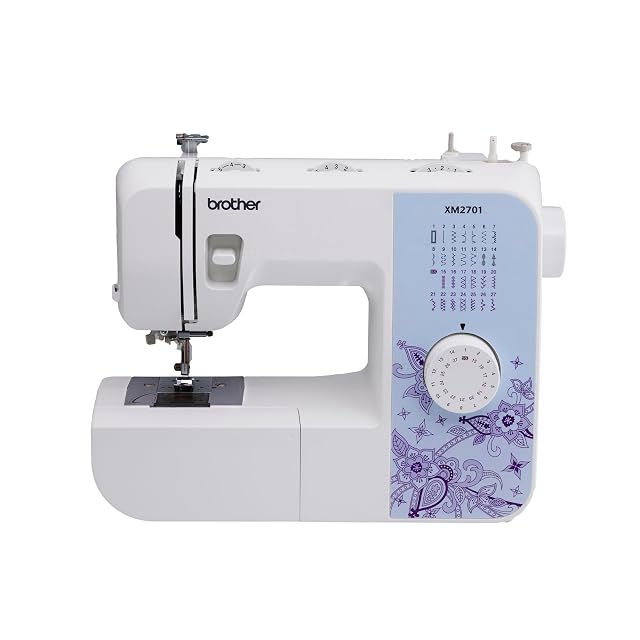
- Choose a machine you can lift comfortably; a full-size beginner machine like the Brother XM2701 is light enough.
- Store it in a carrying case with the foot pedal and power cable inside.
- Keep it at table height, not on the floor, so lifting it out is easy.
See storing a sewing machine for the rest.
Light and power
Add a task lamp or an LED strip over the machine — see sewing room lighting. Plug the machine, lamp and iron into one switched power strip.
Keep only the current project out
One project at the table, the others in labeled bags. It is the single habit that keeps a small space usable — see keeping a sewing space usable.
A typical small setup
- A 40-inch table against a wall, with a lamp.
- Shelves above it.
- A rolling cart beside it.
- A cutting mat behind the door.
- A wool pressing mat in the cart.
Our sewing storage page compares the boxes, carts and organizers we checked.
What sewers ask us
How much space do I need to sew?
A table about 40 inches wide and 20 inches deep holds most home machines with room on the left for fabric. Cutting and pressing can happen elsewhere.
Can I sew on a dining table?
Yes, if it is sturdy. Check the height — elbows roughly level with the machine bed — and put a non-slip mat under the machine.
Where do I iron in a small space?
A tabletop ironing board or a wool pressing mat on the table saves floor space and keeps the iron close to the machine.
Is a portable machine better for a small space?
A lighter machine is easier to put away, but very small machines struggle with thicker seams. A full-size machine around 12 to 15 lb is a good compromise.
Last reviewed