Skip to content

The best presser feet for 2026

A presser foot is the cheapest upgrade that changes what your machine can do. We cover which foot does what, and the compatibility question that trips everyone up: low-shank, high-shank and snap-on are not interchangeable.

What we recommend

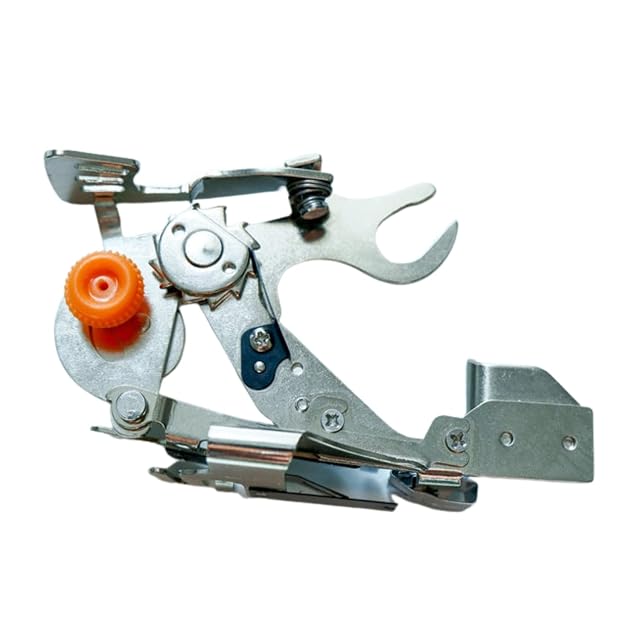
  1. Madam Sew ruffler presser foot with universal low-shank attachment

    Madam Sew Ruffler Presser Foot

    The foot that pleats and gathers as it sews, on a universal low-shank fitting. One reference on every Amazon store we checked.

    Type
    Ruffler / gathering foot
    Attachment
    Universal, low shank (manufacturer)
    Amazon reference
    B0BQ7PYMY6 (all six markets)
    • Gathers evenly and repeatably, which basting threads never do
    • Universal low shank fits most domestic machines
    • Check your machine is low shank — high shank and slant needle machines will not take it
    7.2/10 ≈ $25 / £33 / 44 €
    Check price on Amazon
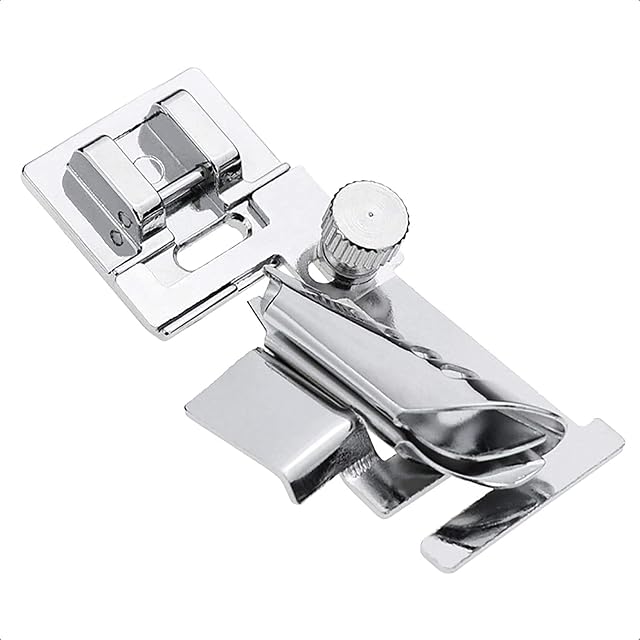
  2. Brother F014N Binder Foot, product photograph

    Brother F014N Binder Foot

    The genuine Brother foot that folds bias tape around a raw edge and stitches it in one pass. One reference on every Amazon store we checked.

    Type
    Bias binder foot
    Fitting
    Brother snap-on, category E
    Amazon reference
    B003I5KLHG (all six markets)
    • Genuine Brother part rather than a generic clone of uncertain fit
    • Folds and stitches the binding in a single pass, once it is set up
    • Sized for a specific tape width — the wrong width will not feed

    Best for: Binding raw edges on quilts, aprons, bags and children's clothes

    7.8/10 ≈ £19 / 22 €
    Check price on Amazon

Who each type suits

Zips
A zip foot lets you sew right against the teeth, which a standard foot does not allow. The first foot to add.
Hems and bias
A hemmer rolls the fabric on its own as it advances. It wants a few trials and then saves a considerable amount of time.
Difficult fabrics
A Teflon or roller foot makes faux leather and coated fabric slide, where the standard foot holds them back.

The trade-offs to weigh

Snap-on against screw fitting
Most domestic machines have a snap-on shank, which makes the feet interchangeable. Some brands impose their own mounting.
Boxed set against chosen feet
A set of twenty feet works out at very little each and mostly contains feet that will never be used. Three chosen feet serve every week.
Generic against original
Generics cost a fraction and sometimes have play that shifts the seam. On a precision foot, the brand counts.

Questions buyers ask

Are feet universal?

Most domestic machines use a compatible snap-on fitting. Some brands have a proprietary system: check before buying.

Which feet are genuinely useful?

A zip foot, a buttonhole foot and a hemming foot. Those three cover almost every need.

What is a walking foot?

A foot that feeds the top layer at the same time as the dogs feed the bottom one. It settles layers shifting on thick spots and slippery fabrics.

Is a boxed set worth it?

It works out at very little per foot and contains many accessories that will not be used. Three chosen feet often cost the same and genuinely serve.

How do I change a foot?

Machine off, foot raised, pressing the small lever at the back of the shank. The foot drops off on its own and the next one snaps on as you lower the bar.

Is the Teflon foot really useful?

On faux leather, coated fabric and vinyl, yes: the standard foot sticks and blocks the feed. On ordinary fabric it adds nothing.

Should I change the plate too?

For straight stitch on fine fabric, a round-hole plate stops the fabric being pulled into the machine. A useful complement to certain feet.

What to remember

Three feet — zip, buttonhole, hemmer — extend a machine more than a higher-end model would. Check that your machine really has the standard snap-on fitting, and be wary of twenty-foot sets of which three will serve.