Skip to content

The best semi-professional sewing machines for 2026

A straight-stitch machine does one thing and does it better than any domestic machine can. We compare speed, stitch consistency and motor type — and are clear about the floor space and noise these machines ask for.

The models we recommend

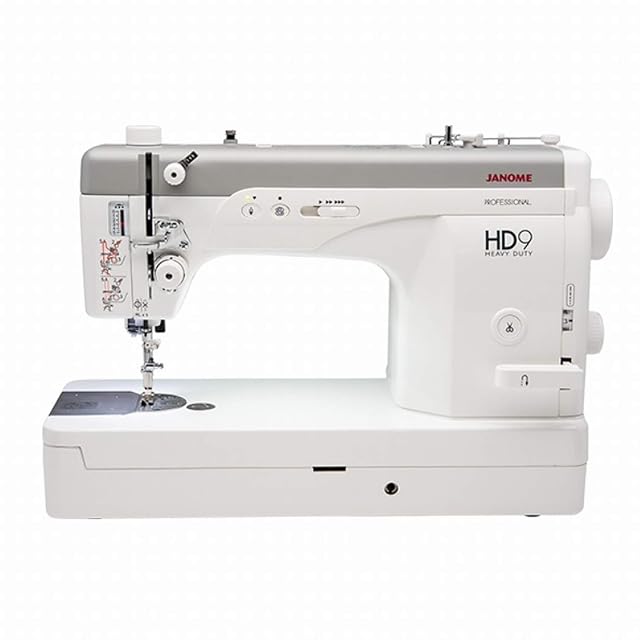
  1. Janome HD9 Professional

    Straight stitch · 1,600 spm · 6 mm stitch

    Janome's fastest domestic machine at a stated 1,600 stitches per minute, straight stitch only, on eight sealed ball bearings. Absent from the French catalogue; the US has its own reference.

    Best for: Quilting and production-style sewing where speed and a clean straight seam are the whole point

    8.6/10

    ≈ $1600 / £1330 / 1800 €

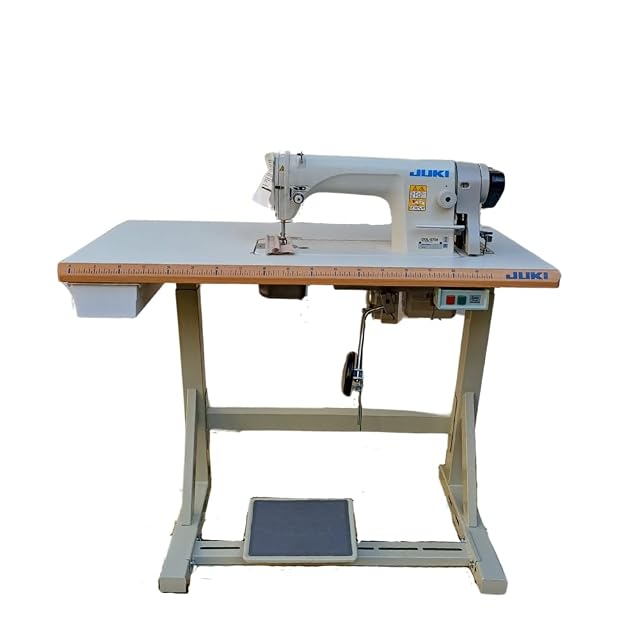
  2. Juki DDL-8700

    Industrial straight stitch · servo motor

    An industrial single-needle straight-stitch machine, sold on all six markets with a servo motor and automatic needle positioning. This is a flatbed industrial, not a heavy domestic machine.

    Best for: Someone sewing long straight seams in volume who has the floor space for a table

    8.3/10

    ≈ $1105 / 1200 €

Who each type suits

Small-scale production
Selling what you sew changes the requirements: speed, stitch consistency and reliability come before everything else.
Straight stitch only
Many semi-professional machines do straight stitch alone, and do it perfectly. A choice, not a shortcoming.
Permanent workshop
These machines are installed on a dedicated table and never move again. The weight and the noise demand it.

The trade-offs to weigh

Speed against control
A fast machine is hard to meter at first. The pedal wants a light foot and a real period of adjustment.
Straight stitch against versatility
The absence of zigzag and buttonhole means keeping a domestic machine alongside. That is the most frequent situation.
Performance against noise
A strong motor and a direct drive make a loud machine. In a flat that is a real subject.

Questions buyers ask

What sets a semi-professional machine apart?

Speed, stitch consistency over long runs and a frame built to last. Rarely an extensive stitch catalogue.

Does it make buttonholes?

Often not. Many of these machines do straight stitch alone, and you have to keep a domestic machine for the rest.

Is it too much for domestic use?

If you sew a few hours a week, yes: the speed and the noise are not justified. It comes into its own in small-scale production.

Do I need a dedicated table?

The weight and the vibration demand it. A light table transmits the noise and moves under the machine.

Is the speed adjustable?

On models with an electronic motor, yes, and that is what makes them approachable for beginners. Clutch motors are far more brutal.

Is the upkeep different?

It is more frequent: regular oiling at the marked points and cleaning after every run. These machines are built to be maintained.

Can it sew fine fabric?

With the right needle and plate, yes, and often better than a domestic machine. The settings have to be redone carefully.

What to remember

A semi-professional machine buys speed, consistency and longevity — rarely versatility. It calls for a dedicated table and regular upkeep, and often leaves the buttonhole to a domestic machine kept alongside.