Skip to content

The best semi-professional sewing machines

A straight-stitch machine does one thing better than any domestic machine can. Speed figures matter less than what sustains them: sealed bearings and a frame that holds its timing.

A straight-stitch machine does one thing better than any domestic machine can. Speed figures matter less than what sustains them: sealed bearings and a frame that holds its timing.

Which one do you need?

You sew for hours at a time
A machine built for duty cycle rather than occasional use, which usually means metal and weight.
You sew heavy or layered fabric
Piercing power and a strong feed matter more than any stitch list.
You need consistency
A straight-stitch-only industrial-style machine gives a quality of seam that general machines rarely match.
You sew occasionally
This category is more machine than you need, and its weight and noise are real drawbacks at home.

Choosing by use

Small-scale production

Where speed, consistency and the ability to run for hours are what you are buying.

Heavy fabric

Canvas, upholstery weight, multiple layers of denim. Where lighter machines stall or skip.

Straight seams at volume

Where a dedicated straight-stitch machine outperforms a general-purpose one clearly.

Home use

Where the weight, noise and speed become genuine considerations rather than specifications.

The criteria that actually matter

Duty cycle and build
Metal construction, a strong motor and bearings meant to run. It is the difference between a machine used for hours and one used for minutes.
Piercing power and feed
Getting through layers is about motor torque and how firmly the fabric is fed. Both matter more than stitch options.
Speed and whether you can control it
These machines are fast, and a speed reducer or servo motor is what makes that speed usable rather than alarming.
Noise, weight and where it will live
A heavy machine on a dedicated table is a very different household object from a portable one in a cupboard.
Needle and accessory standards
Some semi-professional machines use industrial needles and feet. Confirming what fits before buying avoids an expensive surprise.

Which criterion for which use

Your workThe machineThe trade-off
Hours of sewingBuilt for duty cycleWeight and price
Heavy layersStrong feed and motorFewer stitch options
Straight seams at volumeA straight-stitch machineIt only does that
Occasional home sewingNot this categoryOverkill and noise

Mistakes to avoid

Buying one for occasional home use
The weight, noise and speed are real, and a good domestic machine will be more pleasant for the sewing most people do.
Underestimating the speed
These machines are fast. Without a speed reducer or servo motor, the first few hours are genuinely intimidating.
Not checking needle and foot standards
Industrial standards differ from domestic ones. Discovering that after buying is an expensive kind of surprise.
Ignoring the table and the space
Many of these machines expect a dedicated table. That is a furniture decision as much as a machine one.

Choosing by profile

The small maker
Sews to sell, needs consistency and hours of running, and has space for a dedicated machine.
The heavy fabric sewer
Works with canvas, upholstery or layered denim and has hit the limits of a domestic machine.
The enthusiast
Wants seam quality above all, accepts a machine that does one thing extremely well.

Upkeep and how long it lasts

Machines built to run need maintenance on a schedule rather than when something goes wrong. Oiling is frequent on many of them, and lint and thread debris accumulate faster simply because the machine does more work.

  • Follow the oiling schedule; these machines often need it far more often than domestic ones.
  • Clean the hook and bobbin area frequently, since volume means more lint.
  • Check belt tension and motor mounting periodically.
  • Keep the correct industrial needles in stock rather than substituting domestic ones.

Safety

Fast, powerful machines demand more respect than domestic ones.

  • Fit and use any finger guard supplied; these machines will go through a finger.
  • Use a speed reducer or servo if the machine is faster than you can comfortably control.
  • Isolate the power before any adjustment, including changing the needle.
  • Secure the machine and its table so nothing shifts under load.

What we recommend, and why

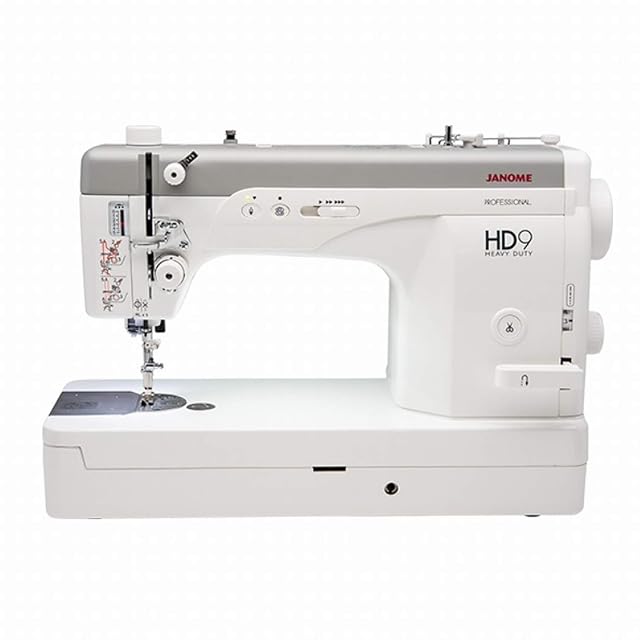
  1. Janome HD9 Professional

    Straight stitch · 1,600 spm · 6 mm stitch

    Janome's fastest domestic machine at a stated 1,600 stitches per minute, straight stitch only, on eight sealed ball bearings. Absent from the French catalogue; the US has its own reference.

    Best for: Quilting and production-style sewing where speed and a clean straight seam are the whole point

    8.6/10

    ≈ $1600 / £1330 / 1800 €

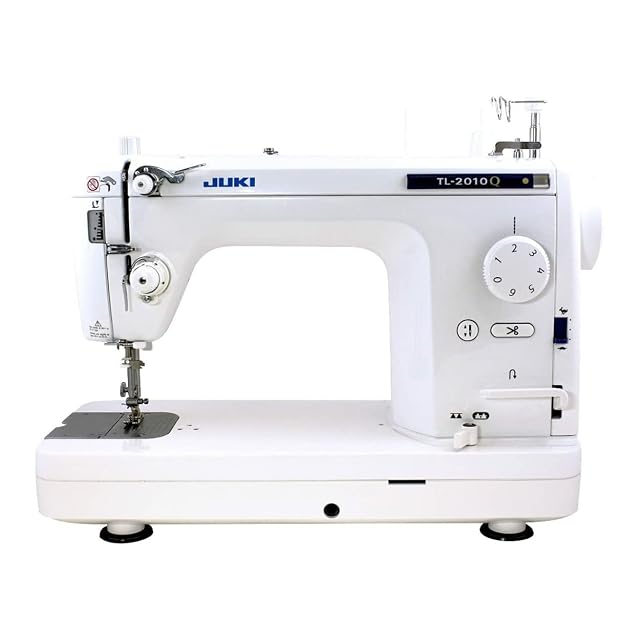
  2. Juki TL-2010Q

    Straight stitch · 12 mm foot lift · knee lever

    A semi-industrial straight-stitch machine for sewing and quilting: automatic thread trimmer, knee lever, and a stated 12 mm presser foot lift. One reference on all six markets we checked.

    Best for: Quilting and garment construction where stitch quality and foot lift matter more than stitch variety

    9.2/10

    ≈ $1150 / £1240 / 1555 €

Questions people actually ask

Do I need a servo motor?

If the machine has an external motor, insist on it. A servo is near-silent, starts from a standstill under control, and lets you sew one stitch at a time. A clutch motor runs continuously and takes months to learn.

Is 1,600 stitches per minute useful at home?

Only on long seams. What the figure really tells you is that the machine is built to sustain it — which means bearings and a frame, and those are what you are buying.

What makes a machine semi-professional?

Build for duty cycle rather than occasional use: metal construction, a stronger motor and the ability to run for hours. It is not a regulated term.

Do I need one for denim?

Not necessarily. A solid domestic machine with the right needle handles a great deal, and technique matters more than most people expect.

Are they very fast?

Often yes, and that is the main adjustment. A speed reducer or servo motor makes the speed usable rather than intimidating.

Do they use different needles?

Some use industrial needles and feet rather than domestic ones. Confirm the standard before buying, since it affects every accessory.

Can I use one at home?

You can, but weight, noise and the need for a dedicated table are real. It is a household decision as much as a sewing one.

Do they only sew straight?

Many straight-stitch machines do, and that is the point of them. Others offer zigzag, but the specialisation is often why the seam quality is good.

Why each one, and for whom

Janome HD9 Professional · $1 600

For : Quilting and production-style sewing where speed and a clean straight seam are the whole point

Main strength : Stated 1,600 spm — the fastest domestic machine we have specification for

Main limitation : Not listed on amazon.fr — French readers get a search

Read the full review →

Juki TL-2010Q · $1 150

For : Quilting and garment construction where stitch quality and foot lift matter more than stitch variety

Main strength : 12 mm presser foot lift, published — the number most manufacturers hide

Main limitation : Straight stitch only — no zigzag, no buttonhole

Read the full review →

What you will need with it

Consumables and protective gear from the same aisle, at the price we recorded. Check compatibility with the model you choose before ordering: it depends on the fitting and the part number, which the product page states.

Deciding in one line

Useful comparisons

Head-to-heads already published between two models from this guide or this aisle.

How this guide is built

The models here come from the catalogue of this site. Specifications are those published by the manufacturer and on the Amazon product page; prices are what Keepa reported on the date below, and both move. The ranking uses declared specifications, the balance of stated strengths and limitations, and price. No product on this site has been physically tested, and nothing here claims otherwise.

Last checked on

The tool we use ourselves

Chosen your machine? Now buy it at the right price.

Sewing machines and overlockers swing by a hundred euros or more across the year, and the biggest "discounts" often land at prices the same model sold for six weeks earlier. UniverTrack tracks the real price history across retailers, spots fake reductions, and alerts you when it is genuinely the moment to buy.

Real price historyBuy-now alertsAI buying assistant
Try free for 14 days →
No commitment · Cancel in one click · 5 languages