Skip to content

The best embroidery machines

Embroidery machines are judged on hoop size, which is a hard ceiling you cannot raise later, and on how designs get onto the machine. There is also an availability problem worth knowing about before you start looking.

Embroidery machines are judged on hoop size, which is a hard ceiling you cannot raise later, and on how designs get onto the machine. There is also an availability problem worth knowing about before you start looking.

Which one do you need?

You want to personalise items
An entry-level embroidery machine with a modest hoop covers names, motifs and small designs.
You want larger designs
Hoop size is the specification that decides everything, and it is expensive to change later.
You also want to sew
A combination machine saves space; a dedicated embroidery machine embroiders while you sew on another.
You want to digitise your own designs
That is separate software and a separate skill, and it is a bigger commitment than the machine.

Choosing by use

Names and monograms

The commonest use, and one a small hoop handles entirely.

Larger designs

Where hoop size becomes the constraint and where multi-hooping is fiddly and visible if misaligned.

Garments and awkward shapes

Where hooping technique and the right stabiliser do more for the result than the machine does.

Small-scale selling

Where design licensing and machine running time become real considerations.

The criteria that actually matter

Hoop size
The specification that limits what you can make. It is the hardest thing to work around and the most expensive to change.
Design transfer
How designs get onto the machine: memory stick, cable or wireless. It affects daily use more than it sounds.
Combination or dedicated
A combination machine sews and embroiders; a dedicated one lets you sew on another machine while it runs.
Built-in designs and fonts
Useful at first, and quickly outgrown. What matters more is which design formats the machine accepts.
The running cost
Stabilisers, threads and designs are ongoing costs. They are easy to overlook when comparing machines.

Which criterion for which use

What you wantWhat decides itThe catch
Names and small motifsA modest hoopLittle
Large designsHoop sizeExpensive to change later
Sewing tooCombination machineOne job at a time
Your own designsDigitising softwareA separate skill

Mistakes to avoid

Buying too small a hoop
It is the limit you meet first and the hardest to work around. Multi-hooping large designs is fiddly and misalignment shows.
Skimping on stabiliser
Stabiliser choice does more for embroidery quality than almost anything else. Puckered results are usually a stabiliser problem.
Hooping badly
Fabric that shifts in the hoop ruins the registration. Hooping technique is the skill that separates good results from poor ones.
Underestimating the running costs
Thread, stabiliser and designs add up steadily. The machine is the start of the spending, not the end.

Choosing by profile

The personaliser
Adds names and small motifs, and is well served by a modest hoop.
The ambitious hobbyist
Wants larger designs and should buy hoop size accordingly, since it is the hardest limit to work around.
The small seller
Needs to think about design licensing, running time and consumable costs, not just the machine.

Upkeep and how long it lasts

Embroidery machines run for long periods and shed a great deal of lint into the bobbin area. Thread breaks are the routine annoyance, and they usually come from a blunt needle, poor thread or an incorrect tension rather than a fault.

  • Clean the bobbin area frequently; long runs generate a lot of lint.
  • Change the needle often, particularly a needle suited to embroidery.
  • Use good quality embroidery thread; cheap thread breaks and shreds.
  • Keep the machine level and stable; vibration over a long run affects registration.

Safety

A machine that runs unattended is the specific risk here.

  • Do not leave the machine running unattended, however long the design.
  • Keep hands away from the embroidery arm, which moves in two axes without warning.
  • Unplug before changing the needle or clearing a thread nest.
  • Make sure the hoop's travel path is clear before starting.

What we recommend, and why

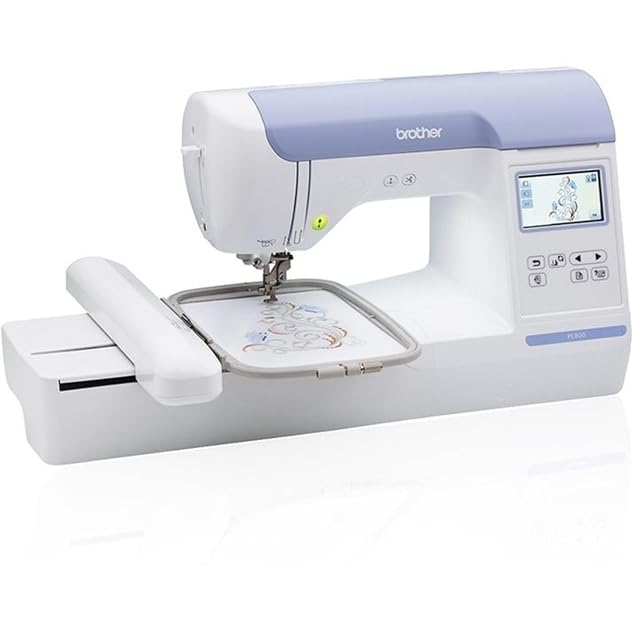
  1. Brother PE800

    138 designs · 5×7 in hoop · US listing

    Brother's dedicated embroidery machine with a 5×7 inch field. We found it on the US store only — the one dedicated embroidery machine we could verify anywhere.

    Best for: US readers who want machine embroidery without compromising a sewing machine

    6.5/10

    ≈ $1095

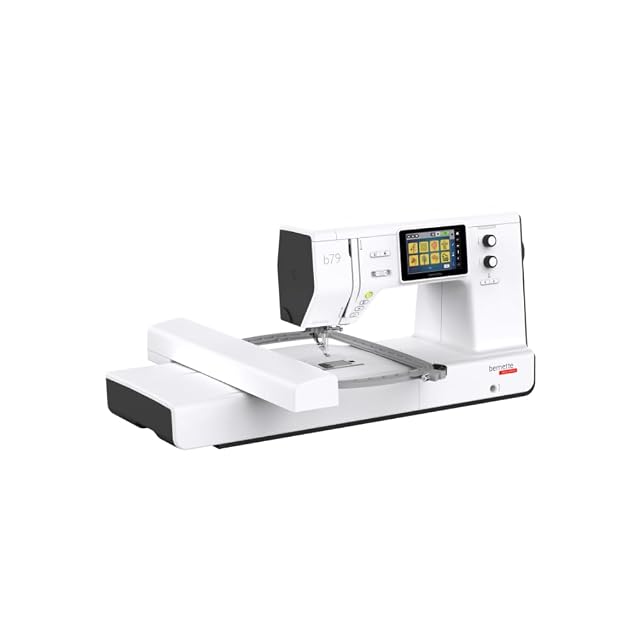
  2. Bernette b79

    Sewing + embroidery · 2 hoops included

    Bernette's combined sewing and embroidery machine, supplied with two embroidery hoops. One reference across all five European markets; absent from the US.

    Best for: Someone who wants embroidery without finding room for a second machine

    7.5/10

    ≈ 2100 €

Questions people actually ask

Why are there so few embroidery machines here?

Because we could only verify two. We checked five dedicated embroidery machines against six Amazon stores and four returned nothing we could confirm. Dedicated embroidery machines are largely sold through dealers in Europe rather than through Amazon.

Combination or dedicated?

Dedicated if you have the space, combination if you do not. A combination machine has to compromise as a sewing machine, and the changeover discourages switching mid-project.

What hoop size do I need?

It depends on what you want to make, and it is the limit you meet first. Larger hoops cost more but are the hardest thing to work around later.

Combination machine or dedicated embroidery machine?

A combination saves space and money but does one job at a time. A dedicated machine lets you sew on another while it embroiders.

Can I use my own designs?

Yes, if they are in a format the machine accepts. Creating your own from scratch means digitising software, which is a separate skill and cost.

Why does my embroidery pucker?

Almost always the stabiliser: wrong type, not enough, or hooping that let the fabric shift. It is rarely the machine.

How much does stabiliser matter?

More than almost anything else. Matching stabiliser type to fabric and design density is the main skill in machine embroidery.

Can I sell what I embroider?

That depends on the licence attached to the designs you use. Many commercial designs restrict resale, and it is worth checking before selling.

Why each one, and for whom

Brother PE800 · $1 095

For : US readers who want machine embroidery without compromising a sewing machine

Main strength : A 5×7 inch field, which covers most jacket-back and towel work

Main limitation : Found on the US store only — European readers get a local search

Read the full review →

Bernette b79 · $2 100

For : Someone who wants embroidery without finding room for a second machine

Main strength : Two hoops included, which is a real saving rather than a marketing one

Main limitation : Absent from amazon.com

Read the full review →

What you will need with it

Consumables and protective gear from the same aisle, at the price we recorded. Check compatibility with the model you choose before ordering: it depends on the fitting and the part number, which the product page states.

Deciding in one line

Useful comparisons

Head-to-heads already published between two models from this guide or this aisle.

How this guide is built

The models here come from the catalogue of this site. Specifications are those published by the manufacturer and on the Amazon product page; prices are what Keepa reported on the date below, and both move. The ranking uses declared specifications, the balance of stated strengths and limitations, and price. No product on this site has been physically tested, and nothing here claims otherwise.

Last checked on

The tool we use ourselves

Chosen your machine? Now buy it at the right price.

Sewing machines and overlockers swing by a hundred euros or more across the year, and the biggest "discounts" often land at prices the same model sold for six weeks earlier. UniverTrack tracks the real price history across retailers, spots fake reductions, and alerts you when it is genuinely the moment to buy.

Real price historyBuy-now alertsAI buying assistant
Try free for 14 days →
No commitment · Cancel in one click · 5 languages