Skip to content

The best pattern and drafting supplies for 2026

Tracing a pattern instead of cutting it is what lets you sew the same pattern in two sizes. We compare pattern paper, tracing materials, curves, grading rulers and weights.

What we recommend

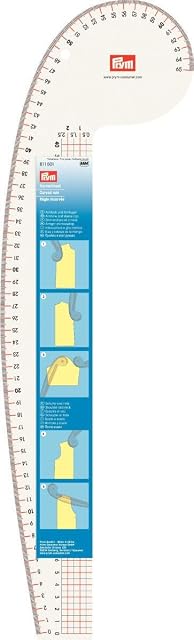
  1. Prym transparent curved pattern ruler, 52.5 by 16 cm

    Prym Curved Ruler 52.5 × 16 cm

    The transparent curve for armholes, necklines and hip lines. One reference on every Amazon store we checked.

    Dimensions
    52.5 × 16 cm
    Material
    Transparent plastic
    Amazon reference
    B00PYEFD2M (all six markets)
    • Transparent, so you can see the line you are matching underneath
    • Long enough for a hip curve, not just an armhole
    • One fixed set of curves — it will not match every pattern block
    7.6/10 ≈ $58 / £26 / 21 €
    Check price on Amazon
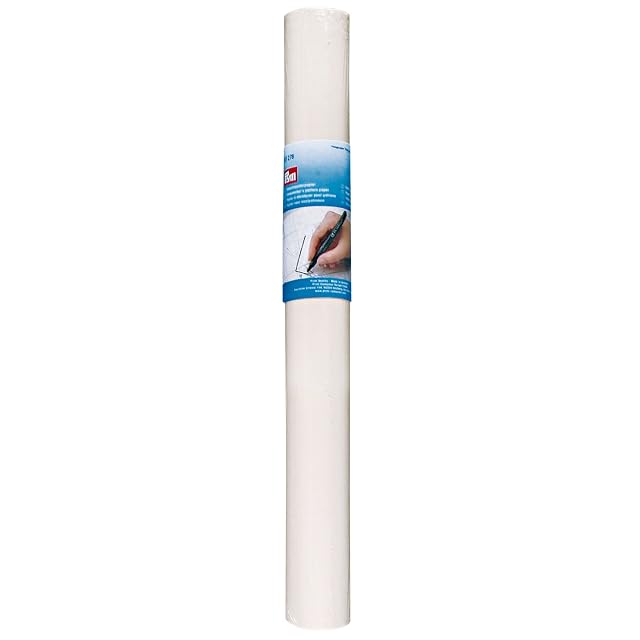
  2. Prym Dressmaker's Pattern Paper, product photograph

    Prym Dressmaker's Pattern Paper

    Trace the pattern, cut the tracing, keep the original. One reference on every Amazon store we checked.

    Type
    Semi-transparent pattern paper
    Format
    Roll
    Amazon reference
    B00DRKTGTG (all six markets)
    • Semi-transparent, so you trace without a lightbox
    • Takes pencil and pen without tearing
    • Creases permanently if folded rather than rolled

    Best for: Anyone who cuts between two sizes, which is most people

    8.0/10 ≈ $12 / £12 / 13 €
    Check price on Amazon

Who each type suits

Multi-size patterns
Cutting straight into the sheet condemns every other size. Tracing is the only method that preserves the pattern.
Altering a pattern
Tracing paper lets you lengthen, widen and experiment without destroying the original. That is where sewing becomes made to measure.
Downloaded patterns
Patterns printed at home want careful assembly. The test square must be measured before any taping.

The trade-offs to weigh

Tracing against cutting
Tracing takes time and keeps every size. Cutting straight in is fast and final.
Thin paper against durability
Very thin paper lies well on the sheet and tears in use. Thicker paper lasts and shows through less well.
Paper pattern against digital
Digital prints as many times as you like and asks you to assemble dozens of sheets. Paper is ready and unique.

Questions buyers ask

Should I cut the pattern or trace it?

Trace it, every time, on a multi-size pattern. Cutting condemns every other size permanently.

What should I trace onto?

Transparent tracing paper, tissue paper or a non-woven pattern material. The non-woven survives folding and keeps better.

How do I check the scale of a printed pattern?

The test square must be measured with a ruler before any assembly. Printing at 95% gives a garment one size smaller.

How do I choose my size?

From the pattern's measurement chart, not from shop sizing. The correspondences vary a great deal between publishers.

Are seam allowances included?

It depends on the publisher, and forgetting is a frequent cause of a garment coming out too small. The instructions always say.

Should I make a toile?

On a fitted garment or an expensive fabric, yes. A toile in cheap cotton avoids ruining the final fabric.

How should patterns be stored?

Flat or rolled in labelled sleeves, never folded tight for years. Sharp creases distort the lines.

What to remember

Trace, never cut a multi-size pattern: cutting condemns every other size. Measure the test square before assembling a printed pattern, and check whether the seam allowances are included — the most frequent cause of a garment coming out too small.