Skip to content

The best heavy-duty sewing machines for 2026

Thick fabric does not need a faster motor so much as a machine that keeps pressure and feed under control. We compare machines on presser foot lift, feed dog height and what actually happens at a folded denim seam.

The models we recommend

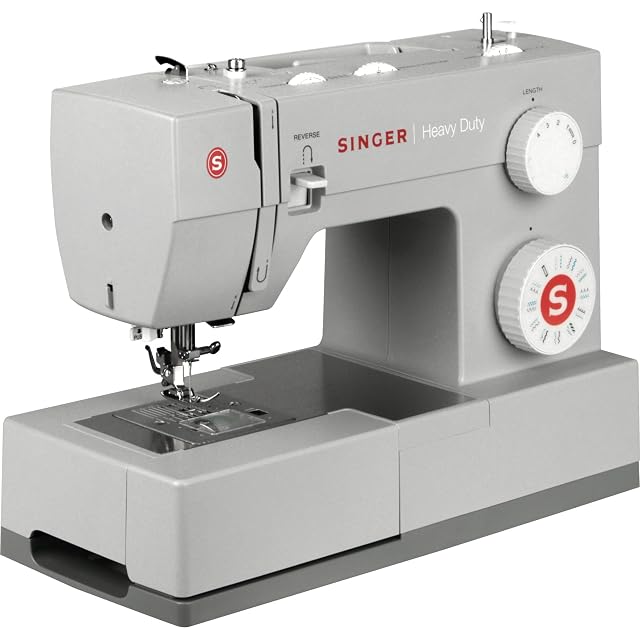
  1. Singer Heavy Duty 4432

    32 stitches · 1,100 spm · metal frame

    The 4423's bigger sibling: same heavy-duty chassis, 32 stitches instead of 23, and a stated 1,100 stitches per minute. Sold under one reference across continental Europe, with a separate UK listing.

    Best for: Denim, canvas and repair work on a machine that will not walk across the table

    8.4/10

    ≈ $240 / £300 / 235 €

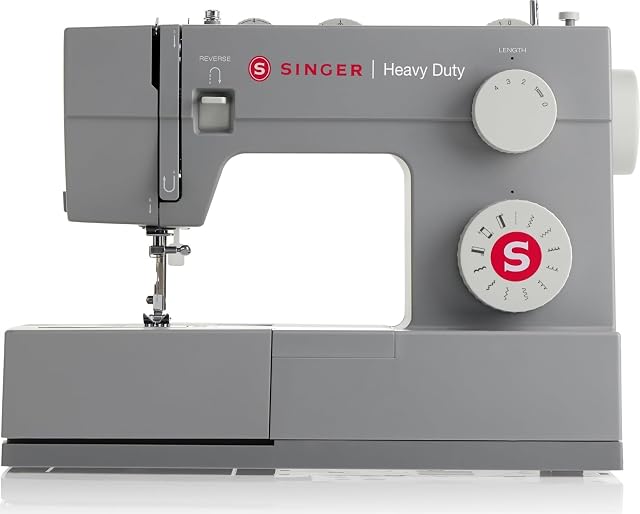
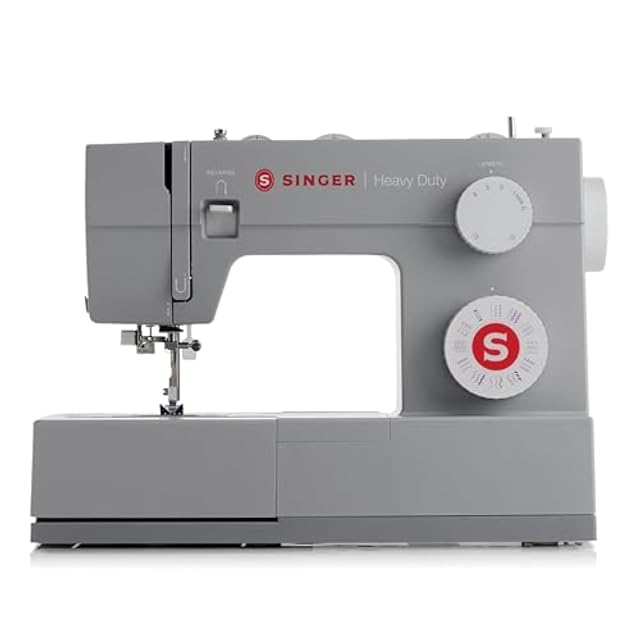
  2. Singer Heavy Duty 4411

    11 stitches · 1,100 stitches/min · steel plate

    The entry Heavy Duty, listed with a 90 W motor, a stainless steel bedplate and 1,100 stitches a minute, on five of the six markets we checked.

    Best for: Denim, canvas, curtains and repeated seams through thick material

    8.0/10

    ≈ $190 / £245 / 225 €

  3. Singer Heavy Duty 4423

    23 stitches · metal frame · 7 kg class

    Singer's best-known heavy-duty machine: a metal internal frame and a motor sized for thick fabric. Sold under one reference across continental Europe and the US, and absent from the UK.

    Best for: Hemming jeans, canvas repairs and workwear alterations

    7.7/10

    ≈ 215 €

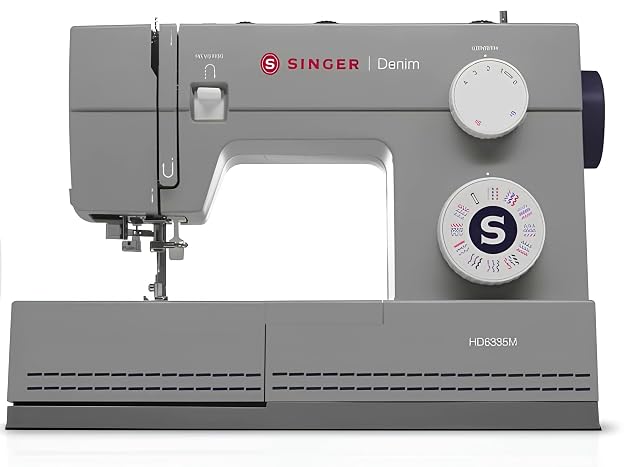
  4. Singer Heavy Duty 6335M

    32 stitches · denim-rated motor

    The denim-badged Heavy Duty, listed with 32 stitches and a motor stated for thick fabric, across four of the six markets we checked.

    Best for: Denim and canvas, with enough stitches left over for garment work

    6.9/10

    ≈ £250 / 260 €

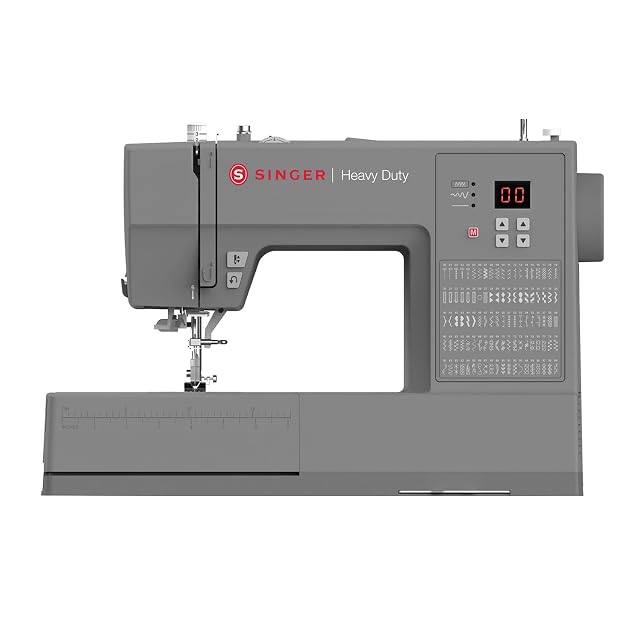
  5. Singer Heavy Duty HD6605C

    Heavy duty · electric

    A current Heavy Duty model, present on all five European markets under one reference — and, unusually for this range, absent from the United States.

    Best for: Thicker fabrics, if you are shopping in Europe

    6.6/10

    ≈ £400 / 350 €

Which one for which need

Working through heavy fabrics

On these machines the number of stitches stays secondary: what counts is the ability to get through thick spots, and a full catalogue often signals a more complete model.

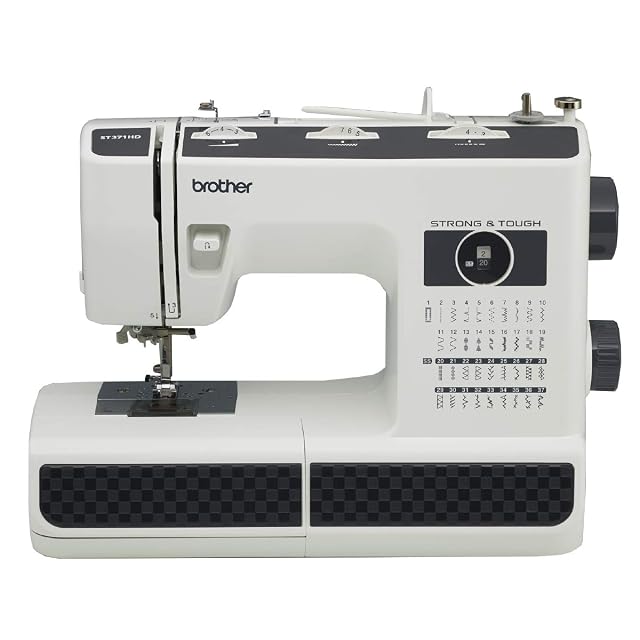
Brother ST371HD Strong & Tough

The essentials of a sturdy machine

A machine with few stitches concentrates its design on feeding thick fabric rather than on the decorative catalogue.

Singer Heavy Duty 4411

Who each type suits

Denim and canvas
Getting through several superimposed layers is the real test. The foot lift height counts as much as the motor.
Upholstery and trim
Thin leather and awning canvas call for a machine that feeds without slipping. That is where a walking foot becomes precious.
Regular, long sewing
A metal frame holds its alignment over time where a plastic chassis develops play. The real marker of this format.

The trade-offs to weigh

Sturdiness against fineness
A machine built for thick fabric feeds fine jerseys and voiles badly. It is not versatile — that is the point of it.
Power against noise and weight
A strong motor and a metal frame make a heavy, loud machine. That is the price of stability.
Label against reality
The words "heavy duty" guarantee nothing on their own. The frame, the foot height and the feed say far more than the marketing phrase.

Questions buyers ask

What makes a machine right for heavy fabrics?

A metal frame, a motor that keeps torque at low speed and a good foot lift height. The marketing phrase alone guarantees nothing.

Can it sew leather?

Thin leather, with the right needle and a foot that does not stick. Thick leather calls for an industrial machine.

Why does my machine jam on thick spots?

The foot rears up on the step and stops feeding. A height shim under the back of the foot restores the level and settles the problem.

Which needle for denim?

A denim needle in a size matched to the thickness, changed often. A universal needle bends or breaks on flat-felled seams.

Do I need a particular thread?

A strong thread suited to the fabric, and above all the same one on top and in the bobbin. Thread that is too fine breaks where the fabric resists.

Do these machines sew jersey?

Badly, generally: they are built to feed thick material, not soft and fine. A versatile machine copes better.

Does the motor get hot?

On long runs at low speed, yes. Regular pauses prevent overheating.

Does an old cast-iron machine do better?

On straight stitch and thickness, often yes. It has neither a usable zigzag nor an automatic buttonhole in exchange.

What to remember

What makes a machine right for heavy fabrics is the frame, the torque at low speed and the foot height — not the label. When it jams on a thick spot, a shim under the back of the foot settles it better than any setting.

This category at a glance

  • Most affordable here: Singer Heavy Duty 4411, at 190 $.
  • Highest Amazon reference in this category: Singer Heavy Duty 6335M (B084VR6FCT (four markets)).

Every model compared

Only the specifications at least four models out of five state. A column that is more empty than full compares nothing.

ModelPriceTypeAmazon reference
Singer Heavy Duty 4411190 $Mechanical, heavy duty rangeB003VWXZKG (five markets)
Singer Heavy Duty 4423215 $MechanicalB004T0WLTU (DE, FR, IT, ES, US)
Brother ST371HD Strong & Tough235 $Heavy duty, mechanicalB01E54NNSC (United States only)
Singer Heavy Duty 4432240 $Mechanical—
Singer Heavy Duty 6335M250 $Heavy duty, mechanicalB084VR6FCT (four markets)
Singer Heavy Duty HD6605C400 $Heavy duty rangeB08YN4KBDV (five European markets)
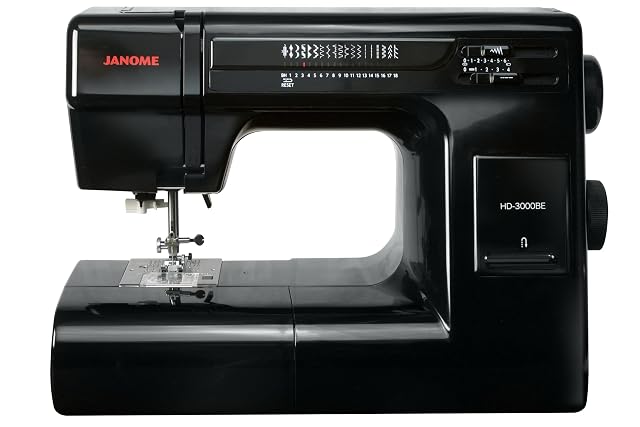
Janome Heavy Duty HD3000 Black Edition435 $Heavy duty, mechanicalB07F3WN511 (five markets)

What each budget buys here

Lower range

190 – 215 $

2 models

Singer Heavy Duty 4423

Mid range

235 – 240 $

2 models

Singer Heavy Duty 4432

Upper range

250 – 435 $

3 models

Singer Heavy Duty HD6605C

Guides covering this category

Sources and method

Specifications: manufacturer sheets and Amazon product pages. Prices and availability: Keepa. No product on this site has been physically tested.

Most recent revision in this category: August 11, 2026.

How we assess products