Skip to content

The best sewing machines for denim and thick fabric

Thick fabric does not need a faster motor so much as a machine that keeps pressure and feed under control. Weight is the most honest proxy at this level: a metal frame does not walk across the table.

Thick fabric does not need a faster motor so much as a machine that keeps pressure and feed under control. Weight is the most honest proxy at this level: a metal frame does not walk across the table.

Which one do you need?

You hem jeans occasionally
The right needle and technique matter far more than a different machine.
You sew denim regularly
A machine with real piercing power and a strong feed, because layers are where light machines stall.
You sew through many layers
A walking foot or a hump jumper, because the problem is usually feeding rather than power.
You are breaking needles
That is a needle and technique problem before it is a machine problem.

Choosing by use

Hemming jeans

The commonest job, and the one where the thick seam crossing is what causes every problem.

Making garments in denim

Where consistent feeding through varying thickness is the real demand.

Repairs and patching

Where a strong straight stitch and the right needle do almost all the work.

Heavier canvas work

Where the demands increase again and a domestic machine may reach its limit.

The criteria that actually matter

Piercing power
Motor torque at low speed is what gets a needle through layers. It is felt rather than published, which is why hands-on trials matter.
The feed system
Getting fabric to move evenly through varying thickness. This is where a walking foot earns its place.
Presser foot lift height
How much clearance you get under the foot. Thick seams need it, and it varies more between machines than people expect.
Adjustable presser foot pressure
Lets you match the pressure to the thickness. On denim it is the difference between feeding and stalling.
The needle you use
A needle designed for heavy fabric, changed often. More denim problems come from this than from the machine.

Which criterion for which use

The jobWhat mattersThe fix
Hemming jeansCrossing the thick seamA hump jumper and the right needle
Denim garmentsEven feedingA walking foot
Thick layersFoot lift and pressureAdjustable pressure
Breaking needlesNeedle type and speedHeavier needle, slower

Mistakes to avoid

Using a universal needle
Denim needs a needle designed for it, in an appropriate size. This single change fixes most skipped stitches and breakages.
Sewing fast at the thick seam
Slowing down, or turning the handwheel by hand over the seam, is what gets through. Speed is what breaks needles.
Forcing the fabric
Pulling denim through deflects the needle into the plate. Let the feed dogs work and help only by guiding.
Blaming the machine first
Needle, thread and technique cause most denim problems. Change those before concluding the machine is not capable.

Choosing by profile

The occasional hemmer
Needs the right needle, a hump jumper and patience rather than a different machine.
The denim maker
Needs a machine with real feeding ability and probably a walking foot.
The repairer
Needs a strong straight stitch, heavy needles and thread that suits the job.

Upkeep and how long it lasts

Sewing denim is hard on needles and produces a lot of lint, and both accumulate faster than on lighter work. A needle used through several denim projects is blunt whether or not it looks it, and a blunt needle is where skipped stitches begin.

  • Change needles frequently; denim blunts them faster than lighter fabric.
  • Clean the bobbin area often, since heavy fabric sheds more lint.
  • Check the needle plate for burrs after any needle breakage.
  • Have the machine serviced if it has been strained repeatedly.

Safety

Thick fabric is where needles break.

  • Wear eye protection if you are regularly sewing through heavy layers.
  • Slow right down over thick seams, or turn the handwheel by hand.
  • Never pull the fabric through; deflected needles are what break.
  • Unplug before clearing a jam or removing a broken needle.

What we recommend, and why

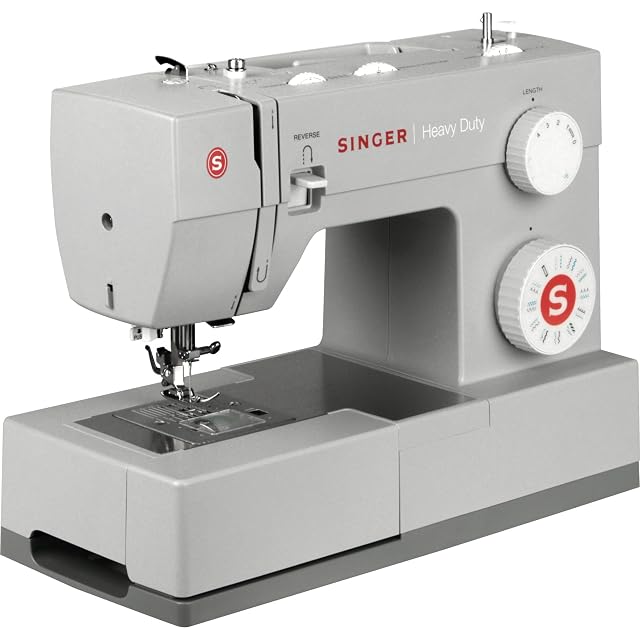
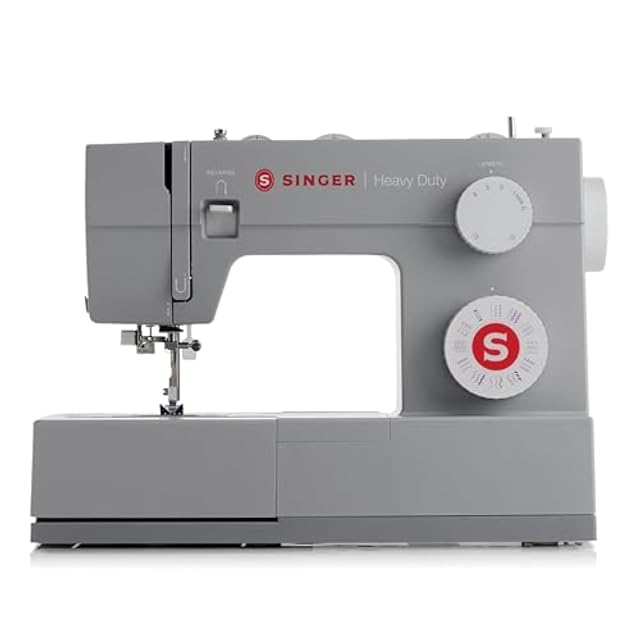
  1. Singer Heavy Duty 4432

    32 stitches · 1,100 spm · metal frame

    The 4423's bigger sibling: same heavy-duty chassis, 32 stitches instead of 23, and a stated 1,100 stitches per minute. Sold under one reference across continental Europe, with a separate UK listing.

    Best for: Denim, canvas and repair work on a machine that will not walk across the table

    8.4/10

    ≈ $240 / £300 / 235 €

  2. Singer Heavy Duty 4423

    23 stitches · metal frame · 7 kg class

    Singer's best-known heavy-duty machine: a metal internal frame and a motor sized for thick fabric. Sold under one reference across continental Europe and the US, and absent from the UK.

    Best for: Hemming jeans, canvas repairs and workwear alterations

    7.7/10

    ≈ 215 €

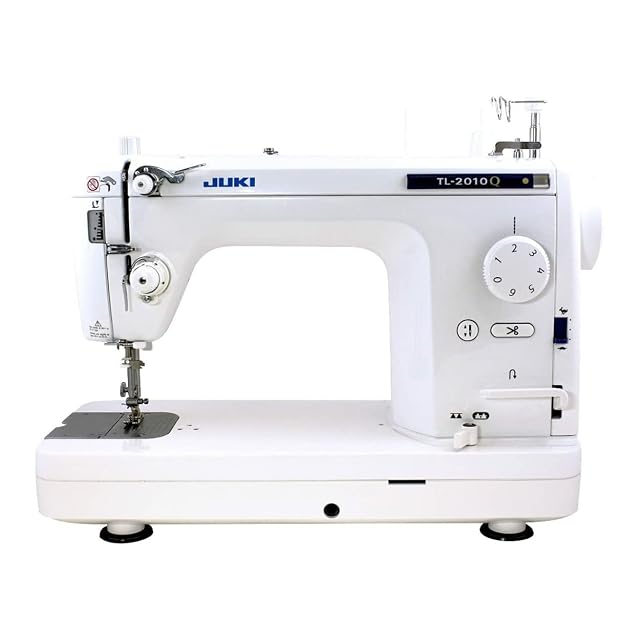
  3. Juki TL-2010Q

    Straight stitch · 12 mm foot lift · knee lever

    A semi-industrial straight-stitch machine for sewing and quilting: automatic thread trimmer, knee lever, and a stated 12 mm presser foot lift. One reference on all six markets we checked.

    Best for: Quilting and garment construction where stitch quality and foot lift matter more than stitch variety

    9.2/10

    ≈ $1150 / £1240 / 1555 €

Questions people actually ask

Will a heavy-duty machine sew leather?

Light leather and faux leather, with a leather needle and a walking or teflon foot, usually yes. Thick veg-tan or several layers of upholstery hide is a different class of machine entirely — that is industrial territory.

Why does my needle break at the jean hem?

A folded jean hem can be eight layers, and the presser foot tips as it climbs, so the needle enters at an angle. Use a 110/18 jeans needle, slow right down, and level the foot with a folded scrap.

Do I need a special machine for denim?

For occasional hemming, no. The needle and technique matter more. For regular denim work, feeding ability and power become genuinely important.

Why does my needle keep breaking?

Usually the wrong needle, too much speed at a thick seam, or pulling the fabric. All three deflect the needle into the plate.

What is a hump jumper?

A small block that levels the presser foot as it climbs a thick seam. It costs very little and solves the classic jeans hemming problem.

Does a walking foot help?

Considerably, when feeding is the problem rather than power. It moves the top layer with the bottom one instead of letting it drag.

What thread should I use?

A thread suited to heavy fabric, and topstitching thread where you want the look. Thread that is too fine breaks under the strain.

Can a beginner machine sew denim?

A single layer usually yes, with the right needle. Multiple layers and seam crossings are where light machines stall.

Why each one, and for whom

Singer Heavy Duty 4432 · $240

For : Denim, canvas and repair work on a machine that will not walk across the table

Main strength : Metal internal frame and a stainless needle plate at an entry-level price

Main limitation : The UK is a separate listing, so check you are buying the same machine

Read the full review →

Singer Heavy Duty 4423 · $215

For : Hemming jeans, canvas repairs and workwear alterations

Main strength : Metal internal frame at an entry-level price

Main limitation : Absent from amazon.co.uk — British readers get a local search

Read the full review →

Juki TL-2010Q · $1 150

For : Quilting and garment construction where stitch quality and foot lift matter more than stitch variety

Main strength : 12 mm presser foot lift, published — the number most manufacturers hide

Main limitation : Straight stitch only — no zigzag, no buttonhole

Read the full review →

What each price bracket buys

What you will need with it

Consumables and protective gear from the same aisle, at the price we recorded. Check compatibility with the model you choose before ordering: it depends on the fitting and the part number, which the product page states.

Deciding in one line

Useful comparisons

Head-to-heads already published between two models from this guide or this aisle.

How this guide is built

The models here come from the catalogue of this site. Specifications are those published by the manufacturer and on the Amazon product page; prices are what Keepa reported on the date below, and both move. The ranking uses declared specifications, the balance of stated strengths and limitations, and price. No product on this site has been physically tested, and nothing here claims otherwise.

Last checked on

The tool we use ourselves

Chosen your machine? Now buy it at the right price.

Sewing machines and overlockers swing by a hundred euros or more across the year, and the biggest "discounts" often land at prices the same model sold for six weeks earlier. UniverTrack tracks the real price history across retailers, spots fake reductions, and alerts you when it is genuinely the moment to buy.

Real price historyBuy-now alertsAI buying assistant
Try free for 14 days →
No commitment · Cancel in one click · 5 languages