Skip to content

The best quilting machines for 2026

Quilting is a fight against bulk, and the specification that decides it is throat space. We compare machines on how much quilt fits to the right of the needle, walking foot quality, and whether stitch regulation earns its cost.

The models we recommend

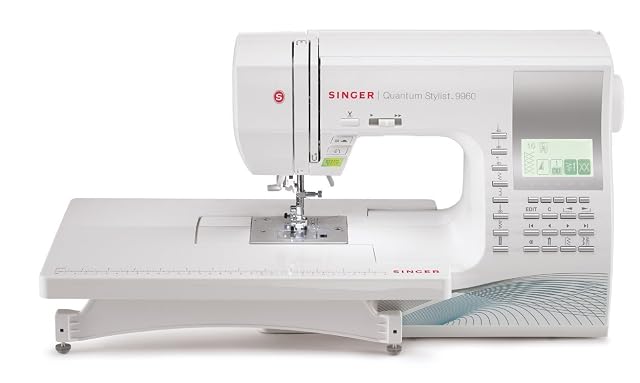
  1. Singer Quantum Stylist 9960

    Computerised · 600 stitches · 7 mm width

    Singer's big computerised machine: 600 stitch patterns, 13 buttonholes, drop feed for free-motion quilting. Four European markets plus a separate US reference; absent from France.

    Best for: A general-purpose machine that can also drop its feed dogs for quilting

    7.7/10

    ≈ $525 / £670 / 505 €

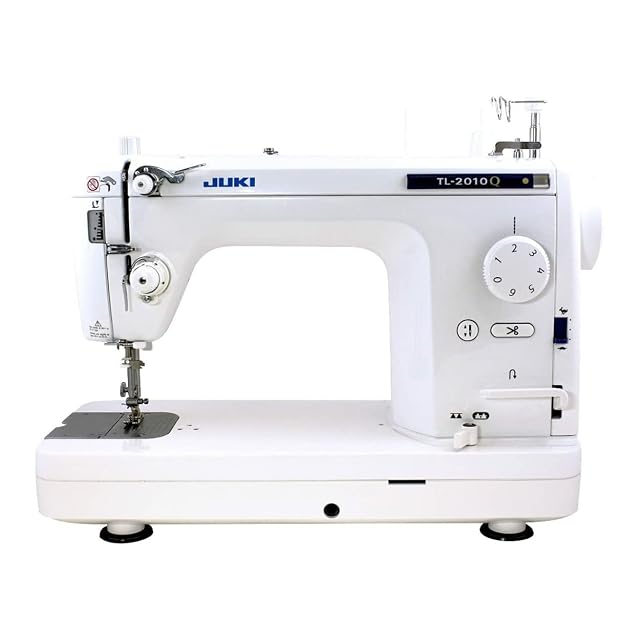
  2. Juki TL-2010Q

    Straight stitch · 12 mm foot lift · knee lever

    A semi-industrial straight-stitch machine for sewing and quilting: automatic thread trimmer, knee lever, and a stated 12 mm presser foot lift. One reference on all six markets we checked.

    Best for: Quilting and garment construction where stitch quality and foot lift matter more than stitch variety

    9.2/10

    ≈ $1150 / £1240 / 1555 €

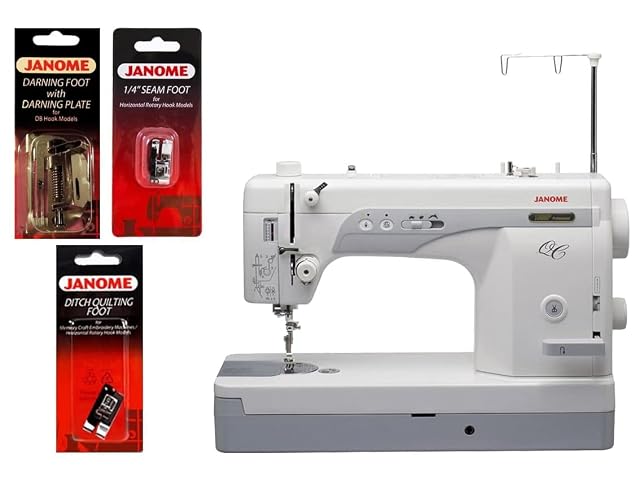
  3. Janome 1600P-QC

    Straight stitch · automatic cutter · 17.5 kg

    A straight-stitch-only machine built for quilting, with an automatic thread cutter and an independent bobbin winder. One reference on all six markets, sold as a bundle with a kit.

    Best for: Piecing and straight-line quilting, where speed and a clean straight seam are the whole job

    8.1/10

    ≈ $1600 / 2070 €

Which one for which need

A frame that does not move

Quilting moves a heavy, bulky piece of work around. A light machine shifts under the weight of the thickness.

Janome 1600P-QC

A machine you can carry

Quilting is often practised in groups, away from home. Weight then becomes a first-rank criterion.

Singer Quantum Stylist 9960

Who each type suits

Piecing blocks
The consistency of the seam allowance decides the final alignment. A quilting foot and a guide count for more than the motor.
Quilting the layers
The space to the right of the needle is the decisive criterion: it decides the size of quilt you can get through.
Free-motion quilting
You must be able to drop the feed dogs and fit a darning foot. Without those two functions, free-motion quilting is not possible.

The trade-offs to weigh

Arm space against footprint
A large throat to the right of the needle changes everything on big pieces and makes for a wide machine. The most structuring criterion in the aisle.
Extension table against space
A widened flat surface supports the work and stops it pulling on the needle. It occupies a lot of table.
Droppable feed dogs against simplicity
That is what allows free-motion quilting, and a function absent from many entry-level machines. A cover plate is a poor substitute.

Questions buyers ask

Which machine to quilt a large piece?

The one that offers the most space to the right of the needle. That dimension, more than power, limits the size of the work.

Do the feed dogs need to drop?

For free-motion quilting, yes, it is indispensable. Without it you cannot move the work freely under the needle.

What is a walking foot?

A foot that feeds the top layer at the same time as the dogs feed the bottom one. Over three layers it prevents the top and bottom shifting apart.

Which needle for quilting?

A quilting needle, with a slightly rounded point and a reinforced shaft, which goes through three layers without deflecting.

Why do my layers shift?

The dogs feed the underside faster than the foot pushes the top. A walking foot is the real answer; pins only limit it.

Is an extension table useful?

Very: without it the work hangs and pulls on the needle, which distorts the seam. An accessory that pays off handsomely.

Do I need a dedicated machine?

No. A good versatile machine with droppable feed dogs and a walking foot does most domestic quilting.

Which thread for quilting?

A quality thread, often cotton, matched to the density of the design. Thread that is too fine barely shows, thread that is too thick breaks more.

What to remember

The space to the right of the needle decides the size of the quilt, and droppable feed dogs decide whether free-motion quilting is possible at all. Against layers shifting, only a walking foot really settles the problem.

This category at a glance

  • Most affordable here: Singer Quantum Stylist 9960, at 525 $.
  • Highest Weight in this category: Janome 1600P-QC (17.51 kg).

Every model compared

Only the specifications at least four models out of five state. A column that is more empty than full compares nothing.

ModelPriceTypeWeight
Singer Quantum Stylist 9960525 $Computerised (manufacturer)9 kg
Juki TL-2010Q1150 $Straight stitch, semi-industrial17.2 kg
Janome 1600P-QC1600 $Straight stitch, high speed (manufacturer)17.51 kg

Guides covering this category

Sources and method

Specifications: manufacturer sheets and Amazon product pages. Prices and availability: Keepa. No product on this site has been physically tested.

Most recent revision in this category: August 11, 2026.

How we assess products