Skip to content

The best machines for quilting

Quilting is a fight against bulk, and throat space is the specification that decides it. Straight-stitch-only machines earn their place here because a small round needle hole gives a visibly better seam.

Quilting is a fight against bulk, and throat space is the specification that decides it. Straight-stitch-only machines earn their place here because a small round needle hole gives a visibly better seam.

Which one do you need?

You piece quilt tops
An accurate quarter-inch seam and a good straight stitch matter more than anything else.
You quilt the layers yourself
Throat space and a walking foot are the two things that decide whether it is possible at home.
You want free-motion quilting
Drop feed and a darning foot, plus a great deal of practice on scraps.
You make large quilts
Throat space becomes the limiting factor, and a longarm service is a legitimate alternative to buying.

Choosing by use

Piecing

Where a quarter-inch foot and consistent straight stitching do almost all the work.

Straight-line quilting

Where a walking foot is essential, because three layers drag against each other otherwise.

Free-motion quilting

Where the feed dogs drop and you move the fabric yourself, which is a skill rather than a setting.

Binding

Where accurate stitching close to an edge matters and where a good foot selection helps.

The criteria that actually matter

Throat space
The gap to the right of the needle. It decides how much quilt you can physically roll through, and it is the specification quilters name first.
Walking foot compatibility
Whether one is included or available. Quilting three layers without one is a fight against differential feeding.
Feed dog drop
Required for free-motion work. A cover plate is a workaround rather than an equivalent.
Needle down and speed control
Stopping with the needle in the fabric transforms pivoting, and speed control makes free-motion work far more manageable.
An extension table
Supporting the weight of a quilt changes the result. Without it the quilt drags and the stitching suffers.

Which criterion for which use

The stageWhat you needWhy
PiecingA quarter-inch footAccuracy compounds
Straight-line quiltingA walking footThree layers drag
Free-motionFeed dog drop and darning footYou move the fabric
Large quiltsThroat space and a tableBulk and weight

Mistakes to avoid

Quilting without a walking foot
The top layer drags against the bottom and the result puckers. It is the accessory that most changes quilting results.
Letting the quilt hang off the table
The weight pulls the fabric and distorts the stitching. An extension table or a table pushed against a wall solves it.
Expecting free-motion to be automatic
It is a skill built on practice, not a setting. Sandwiched scraps are how it is learned.
Underestimating a large quilt's bulk
Throat space is the practical limit at home. A longarm service is a legitimate answer rather than an admission of defeat.

Choosing by profile

The piecer
Needs accuracy and a quarter-inch foot, and can send the quilting out.
The home quilter
Needs throat space, a walking foot and an extension table more than anything else.
The free-motion quilter
Needs feed dog drop, speed control and a lot of practice.

Upkeep and how long it lasts

Quilting produces far more lint than garment sewing, because batting sheds constantly. A machine used for quilting needs cleaning more often, and skipping that is how the bobbin area clogs and the tension goes strange.

  • Clean the bobbin area after every large project; batting sheds heavily.
  • Change needles regularly, particularly a quilting needle for the layers.
  • Check the walking foot's linkage; it takes constant motion and wears.
  • Oil where the manual says, and only there.

Safety

Large quilts and fast needles.

  • Support the quilt's weight so it cannot drag your hands toward the needle.
  • Keep fingers well clear during free-motion work; there is no presser foot control of your hands.
  • Use quilting gloves for grip rather than gripping close to the needle.
  • Unplug before clearing thread nests under the plate.

What we recommend, and why

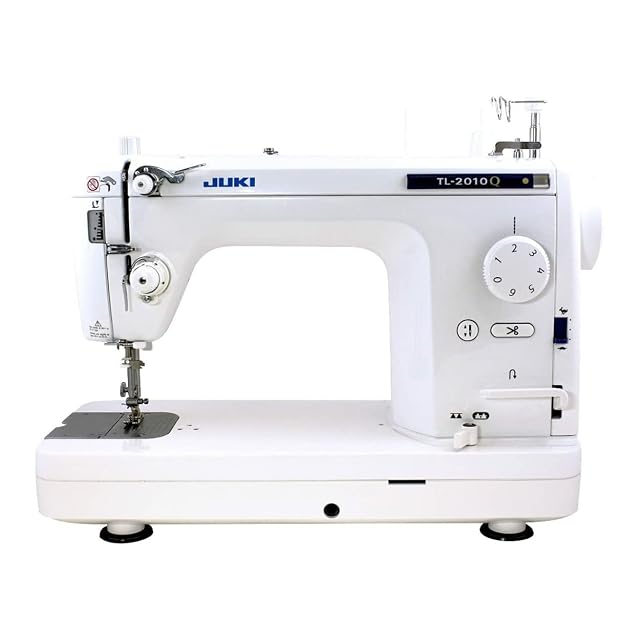
  1. Juki TL-2010Q

    Straight stitch · 12 mm foot lift · knee lever

    A semi-industrial straight-stitch machine for sewing and quilting: automatic thread trimmer, knee lever, and a stated 12 mm presser foot lift. One reference on all six markets we checked.

    Best for: Quilting and garment construction where stitch quality and foot lift matter more than stitch variety

    9.2/10

    ≈ $1150 / £1240 / 1555 €

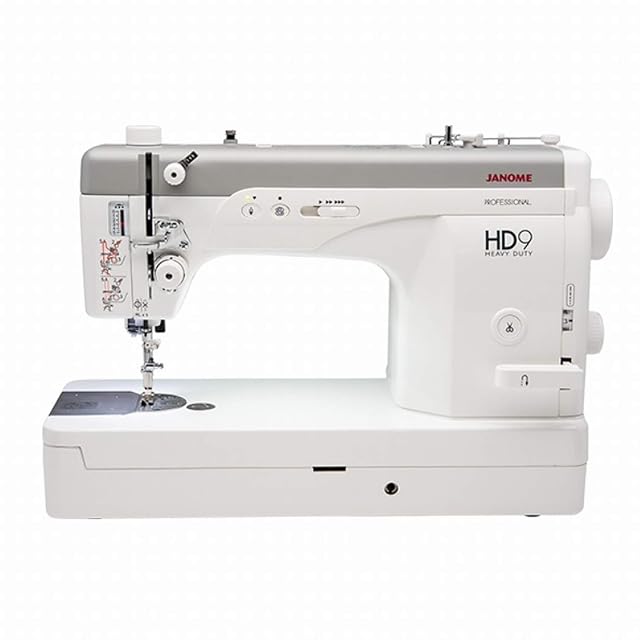
  2. Janome HD9 Professional

    Straight stitch · 1,600 spm · 6 mm stitch

    Janome's fastest domestic machine at a stated 1,600 stitches per minute, straight stitch only, on eight sealed ball bearings. Absent from the French catalogue; the US has its own reference.

    Best for: Quilting and production-style sewing where speed and a clean straight seam are the whole point

    8.6/10

    ≈ $1600 / £1330 / 1800 €

Questions people actually ask

How much throat space do I need?

For a queen-size quilt, under roughly 230 mm means rolling the quilt so tightly that you fight the machine on every pass. It is the commonest reason quilters end up owning a second, wider machine.

Straight stitch only — really?

For quilting, yes. You are sewing straight lines and free-motion curves; you do not need a buttonhole. What you gain is a needle plate with a small round hole, which supports fine fabric and produces a cleaner stitch.

What is throat space and why does it matter?

The gap to the right of the needle. It decides how much of a rolled quilt you can physically fit through, and it is the limit quilters hit first.

Do I need a walking foot?

For quilting three layers, effectively yes. Without one the top layer drags against the bottom and the result puckers.

What is free-motion quilting?

Quilting with the feed dogs lowered, moving the fabric yourself. It is a skill built through practice rather than a setting you switch on.

Can I quilt a large quilt on a domestic machine?

Up to a point, and throat space is the limit. Sending a large quilt to a longarm service is a common and sensible choice.

Why is my quilting puckering?

Usually differential feeding without a walking foot, or the quilt's weight dragging off the table. Both are fixable.

Does a quarter-inch foot matter?

For piecing, considerably. Small inaccuracies compound across a quilt top, and an accurate seam allowance is what keeps blocks square.

Why each one, and for whom

Juki TL-2010Q · $1 150

For : Quilting and garment construction where stitch quality and foot lift matter more than stitch variety

Main strength : 12 mm presser foot lift, published — the number most manufacturers hide

Main limitation : Straight stitch only — no zigzag, no buttonhole

Read the full review →

Janome HD9 Professional · $1 600

For : Quilting and production-style sewing where speed and a clean straight seam are the whole point

Main strength : Stated 1,600 spm — the fastest domestic machine we have specification for

Main limitation : Not listed on amazon.fr — French readers get a search

Read the full review →

What you will need with it

Consumables and protective gear from the same aisle, at the price we recorded. Check compatibility with the model you choose before ordering: it depends on the fitting and the part number, which the product page states.

Deciding in one line

Useful comparisons

Head-to-heads already published between two models from this guide or this aisle.

How this guide is built

The models here come from the catalogue of this site. Specifications are those published by the manufacturer and on the Amazon product page; prices are what Keepa reported on the date below, and both move. The ranking uses declared specifications, the balance of stated strengths and limitations, and price. No product on this site has been physically tested, and nothing here claims otherwise.

Last checked on

The tool we use ourselves

Chosen your machine? Now buy it at the right price.

Sewing machines and overlockers swing by a hundred euros or more across the year, and the biggest "discounts" often land at prices the same model sold for six weeks earlier. UniverTrack tracks the real price history across retailers, spots fake reductions, and alerts you when it is genuinely the moment to buy.

Real price historyBuy-now alertsAI buying assistant
Try free for 14 days →
No commitment · Cancel in one click · 5 languages