Skip to content

The best sewing machines for children

A toy machine skips stitches and jams, which teaches a child that sewing is frustrating. A real machine set to half speed teaches them that it works. Look for a speed limiter and a finger guard.

A toy machine skips stitches and jams, which teaches a child that sewing is frustrating. A real machine set to half speed teaches them that it works. Look for a speed limiter and a finger guard.

Which one do you need?

A child is learning with supervision
A real machine with a speed limiter, because toy machines frustrate rather than teach.
You want maximum safety
A finger guard, a low speed setting and constant adult supervision, in that order of importance.
The child is very young
Hand sewing first is a legitimate answer, and it teaches more than a machine does at that age.
You want it to last
Buy a simple adult machine rather than a children's one; the child grows and the machine does not.

Choosing by use

Learning to sew

Where a machine that sews reliably matters more than any child-specific feature, because a machine that skips stitches teaches frustration.

Simple projects

Cushions, bags, straight seams. Nothing here needs a complicated machine.

Shared use

Where a simple adult machine with a speed limiter serves both a child and a parent.

School and clubs

Where robustness and easy threading matter more than anything else.

The criteria that actually matter

A speed limiter
The single most useful feature. A machine that cannot run fast is a machine a child can control.
A finger guard
A physical barrier in front of the needle. It does not replace supervision but it does reduce the commonest accident.
Whether it actually sews well
Toy machines that skip stitches and jam teach children that sewing is frustrating. A real machine is kinder.
Simple threading
A child will thread it repeatedly. A clear threading path, ideally numbered on the machine, matters more than stitch options.
Weight and stability
A machine that slides around is harder for small hands. Some weight, or a non-slip mat, helps considerably.

Which criterion for which use

The childThe machineThe condition
Very youngHand sewing firstNone
Learning with an adultA simple machine with speed limitConstant supervision
Confident and keenA basic adult machineSupervision, then independence
Any ageA finger guardIt supplements supervision

Mistakes to avoid

Buying a toy machine
Machines that skip stitches and jam teach a child that sewing is frustrating. A simple real machine is a kinder purchase.
Leaving a child unsupervised
A finger guard and a speed limiter reduce risk; they do not remove it. Sewing machine needle injuries to children do happen.
Starting with a complicated project
A straight seam on a cushion builds confidence. A garment with a zip does the opposite.
Choosing on appearance
A bright colour does not help a child sew. Reliable stitching, a speed limiter and simple threading do.

Choosing by profile

The young beginner
A simple machine with a speed limiter and a finger guard, always used with an adult present.
The keen older child
A basic adult machine they will not outgrow, with supervision that reduces as competence grows.
The classroom
Robust simple machines with clear threading paths, chosen for reliability above all.

Upkeep and how long it lasts

A machine a child uses is a machine that will be threaded wrongly, run over pins and stopped mid-seam, and it needs checking more often as a result. Lint and bent needles accumulate faster than on an adult's machine.

  • Check and change the needle often; children hit pins more than adults do.
  • Clean the bobbin area regularly, since jams and lint accumulate faster.
  • Keep the manual with the machine so threading can be checked.
  • Store it with the power lead detached so it cannot be switched on unattended.

Safety

The most important section in this guide.

  • An adult supervises every session, without exception, whatever the machine's features.
  • Use the speed limiter and fit the finger guard if one is supplied.
  • Teach that fingers stay to the side of the foot and never in front of the needle.
  • Unplug and store the machine so it cannot be used unattended.

What we recommend, and why

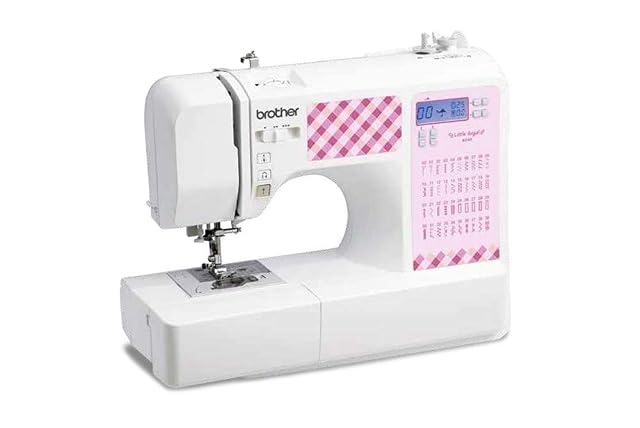
  1. Brother KD40 Little Angel

    Computerised · UK listing only

    Brother's computerised machine aimed at children and beginners. We found it on the UK store only — it did not appear on the German, French, Italian, Spanish or US catalogues.

    Best for: A UK household teaching a child to sew on a machine that will not frustrate them

    6.0/10

    ≈ £375

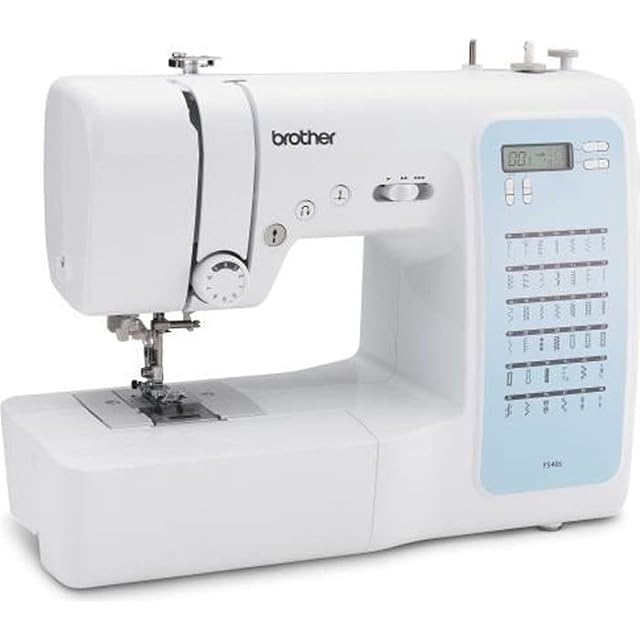
  2. Brother FS40S

    40 stitches · LCD · free arm · 2.95 kg

    Brother's light computerised machine: 40 stitches, an LCD, a needle threader and a free arm, at just under three kilos. One reference on all six Amazon stores we checked.

    Best for: Light dressmaking, alterations and a first machine that has to live in a cupboard

    7.5/10

    ≈ 200 €

Questions people actually ask

What age can a child start?

Around seven or eight with supervision, on a machine with a speed limiter. What matters more than age is whether they can reach the pedal comfortably and keep both hands away from the needle.

Is a child-branded machine worth it?

Not usually. A speed limiter on a full-size machine beats a toy machine at the same price, and the child does not grow out of it.

What age can a child start using a sewing machine?

It depends far more on the individual child than on a number, and it always depends on constant adult supervision. Hand sewing first is a good route.

Are children's sewing machines any good?

Machines that skip stitches and jam teach frustration. A simple real machine with a speed limiter is usually the better purchase.

What is the most important feature?

A speed limiter, because a machine a child can control is a machine they can learn on. A finger guard is a valuable addition.

Does a finger guard make it safe?

It reduces the commonest accident but does not remove risk. It supplements supervision rather than replacing it.

What should a child sew first?

Straight seams on something simple, like a cushion or a bag. Confidence comes from finishing something, not from difficulty.

Should I buy a machine the child will grow into?

Often yes. A simple adult machine with a speed limiter serves a beginner and continues to serve them later.

Why each one, and for whom

Brother KD40 Little Angel · £375

For : A UK household teaching a child to sew on a machine that will not frustrate them

Main strength : A real computerised machine rather than a toy, which is the right approach for a child

Main limitation : Found on the UK store only — most readers cannot buy it here

Read the full review →

Brother FS40S · £200

For : Light dressmaking, alterations and a first machine that has to live in a cupboard

Main strength : Available under a single reference on all six markets we checked — rare

Main limitation : Under three kilos means a plastic-framed chassis, with the stability that implies

Read the full review →

What each price bracket buys

Entry level

£200 – £350

2 models

Upper range

£695 – £1 695

2 models

What you will need with it

Consumables and protective gear from the same aisle, at the price we recorded. Check compatibility with the model you choose before ordering: it depends on the fitting and the part number, which the product page states.

Deciding in one line

Useful comparisons

Head-to-heads already published between two models from this guide or this aisle.

How this guide is built

The models here come from the catalogue of this site. Specifications are those published by the manufacturer and on the Amazon product page; prices are what Keepa reported on the date below, and both move. The ranking uses declared specifications, the balance of stated strengths and limitations, and price. No product on this site has been physically tested, and nothing here claims otherwise.

Last checked on

The tool we use ourselves

Chosen your machine? Now buy it at the right price.

Sewing machines and overlockers swing by a hundred euros or more across the year, and the biggest "discounts" often land at prices the same model sold for six weeks earlier. UniverTrack tracks the real price history across retailers, spots fake reductions, and alerts you when it is genuinely the moment to buy.

Real price historyBuy-now alertsAI buying assistant
Try free for 14 days →
No commitment · Cancel in one click · 5 languages