Skip to content

The best portable and compact sewing machines

A portable machine trades power for a carry handle. The line worth drawing is weight: below about 3 kg there is no room for a metal frame, and the machine skips on anything thicker than shirting.

A portable machine trades power for a carry handle. The line worth drawing is weight: below about 3 kg there is no room for a metal frame, and the machine skips on anything thicker than shirting.

Which one do you need?

You have no permanent sewing space
A light machine you can carry out and put away is worth more than features you cannot reach.
You take classes
Weight and a carry case are the real specification, because you will be carrying it regularly.
You only make repairs
A small machine covers hems and seams perfectly well, and its limits rarely appear.
You sew heavy fabric
Portability and power pull in opposite directions, and a light machine will struggle.

Choosing by use

Repairs and hems

The main use, and one a small machine handles entirely.

Classes and workshops

Where the weight and a proper handle or case decide whether you take it at all.

Small living spaces

Where a machine that stores in a cupboard is a machine that gets used.

Travel and holidays

Where compact size matters and where some machines run on batteries, with the limits that implies.

The criteria that actually matter

Weight against stability
The central trade-off. Light enough to carry, heavy enough not to walk across the table while sewing.
What it will actually sew
Small machines handle light and medium fabric. Layered denim and canvas are where the limits appear quickly.
A proper foot pedal
Some very small machines have only a button. A pedal gives far better control and is worth insisting on.
Case or handle
A machine you carry needs somewhere to grip and something to protect it. A soft cover is not the same as a case.
Standard bobbins and needles
Some very compact machines use unusual consumables. Standard ones are far easier to replace.

Which criterion for which use

Your situationThe machineThe limit
Small home, occasional sewingA light portable machineHeavy fabric
ClassesLight with a caseNothing much
Repairs onlyA compact machineRarely reached
Denim and canvasNot a portableIt will struggle

Mistakes to avoid

Expecting a portable to handle everything
Light machines handle light and medium fabric well. Layered denim is where they stall, and that is a design consequence rather than a fault.
Buying a machine with no foot pedal
A button gives one speed and no fine control. A pedal is what lets you sew slowly and accurately.
Ignoring stability
A machine that shifts as you sew makes straight lines harder. A non-slip mat under it helps considerably.
Not checking the consumables
Unusual bobbin sizes and needle systems make an otherwise cheap machine expensive to keep running.

Choosing by profile

The flat dweller
Needs a machine that lives in a cupboard and comes out on the kitchen table.
The class attender
Carries their machine regularly and cares about weight and a case more than stitch options.
The mender
Sews hems and seams, and will never approach the limits of a small machine.

Upkeep and how long it lasts

Portable machines get carried, dropped and stored in places that are less than ideal, and that is what shortens their lives. Lint still causes most faults, and a machine stored in a cold damp cupboard develops its own problems.

  • Carry it by a proper handle or in a case rather than by the arm.
  • Brush lint from the bobbin area; small machines clog quickly.
  • Store it somewhere dry rather than a cold outbuilding.
  • Use a non-slip mat while sewing to keep it steady.

Safety

Small machines are still needle machines.

  • Unplug before changing needles or clearing thread jams.
  • Keep fingers clear; a small machine's needle is no less sharp.
  • Do not force thick fabric through a machine that is struggling; the needle can break.
  • Check the power lead regularly, since portable machines flex their cables constantly.

What we recommend, and why

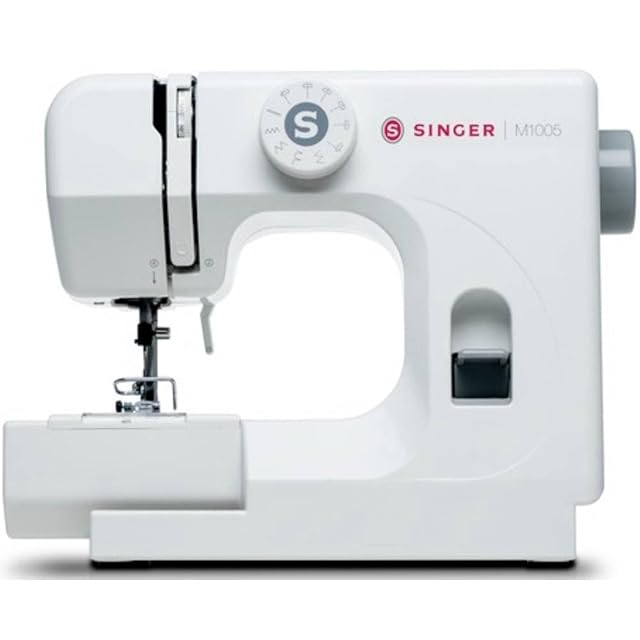
  1. Singer M1005

    Free arm · semi-automatic · compact

    A compact free-arm machine, available under one reference across all five European markets. The most widely available portable machine in our checks.

    Best for: Alterations, repairs and a machine that lives in a cupboard

    7.3/10

    ≈ 100 €

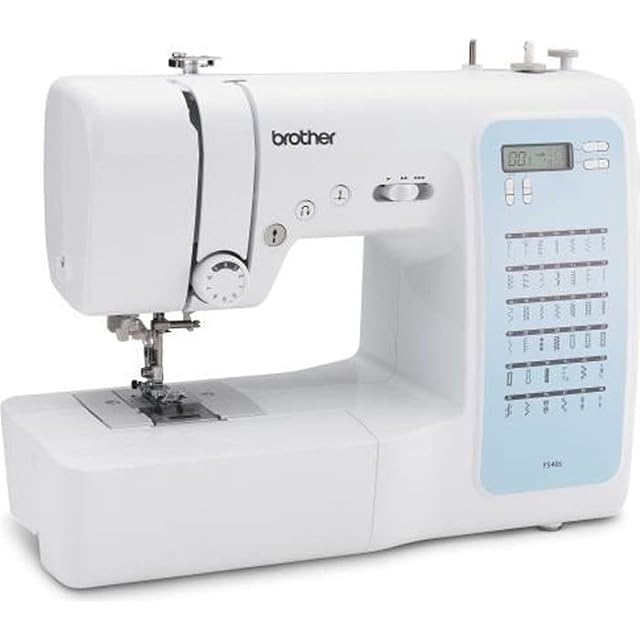
  2. Brother FS40S

    40 stitches · LCD · free arm · 2.95 kg

    Brother's light computerised machine: 40 stitches, an LCD, a needle threader and a free arm, at just under three kilos. One reference on all six Amazon stores we checked.

    Best for: Light dressmaking, alterations and a first machine that has to live in a cupboard

    7.5/10

    ≈ 200 €

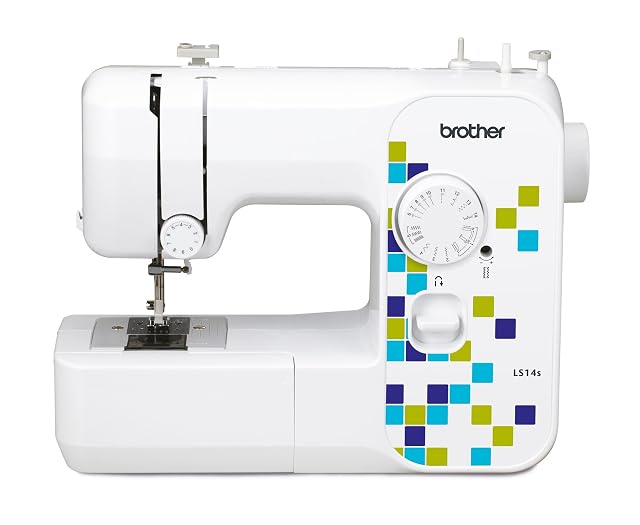
  3. Brother LS14s

    Mechanical · metal chassis · UK listing

    Brother's compact metal-chassis mechanical machine. We found it on the UK store only — and it is the model whose reference Amazon appears to share with the continental JX17FE.

    Best for: A first or second machine in the UK where space is short

    6.2/10

    ≈ £89

Questions people actually ask

How light is too light?

Beware anything sold as a "mini" machine under about 3 kg. A full-size machine at 7 kg is still perfectly portable between rooms, and it will actually sew.

Does a free arm matter on a compact machine?

Yes — it is one of very few features that changes what you can physically sew. Hemming a trouser leg without one means turning the garment inside out and fighting the bulk.

Can a portable machine sew denim?

A single layer, often. Layered denim and canvas are where light machines stall, and forcing them breaks needles.

Do I need a foot pedal?

Strongly recommended. A button gives one speed and no fine control, while a pedal lets you sew slowly and accurately.

Are battery-powered machines any good?

For very light repairs they work, but power and consistency suffer. A mains machine is a better tool for anything regular.

How do I stop it moving on the table?

A non-slip mat underneath. Light machines tend to shift, and that makes straight lines harder than they need to be.

Do they use standard bobbins?

Not always. Some compact machines use unusual consumables, which makes an inexpensive machine costly to keep running.

Is a portable enough as a first machine?

For repairs and light garment work, yes. If you know you want to sew heavy fabric, buy for that instead.

Why each one, and for whom

Singer M1005 · 100 €

For : Alterations, repairs and a machine that lives in a cupboard

Main strength : Free arm on a compact machine — sleeves and cuffs without fighting

Main limitation : Absent from amazon.com

Read the full review →

Brother FS40S · 200 €

For : Light dressmaking, alterations and a first machine that has to live in a cupboard

Main strength : Available under a single reference on all six markets we checked — rare

Main limitation : Under three kilos means a plastic-framed chassis, with the stability that implies

Read the full review →

Brother LS14s · 89 €

For : A first or second machine in the UK where space is short

Main strength : Metal chassis on a compact machine — uncommon at this size

Main limitation : Found on the UK store only

Read the full review →

What each price bracket buys

Entry level

89 € – 200 €

3 models

Mid range

350 € – 525 €

3 models

Upper range

600 € – 1 695 €

3 models

What you will need with it

Consumables and protective gear from the same aisle, at the price we recorded. Check compatibility with the model you choose before ordering: it depends on the fitting and the part number, which the product page states.

Deciding in one line

Useful comparisons

Head-to-heads already published between two models from this guide or this aisle.

How this guide is built

The models here come from the catalogue of this site. Specifications are those published by the manufacturer and on the Amazon product page; prices are what Keepa reported on the date below, and both move. The ranking uses declared specifications, the balance of stated strengths and limitations, and price. No product on this site has been physically tested, and nothing here claims otherwise.

Last checked on

The tool we use ourselves

Chosen your machine? Now buy it at the right price.

Sewing machines and overlockers swing by a hundred euros or more across the year, and the biggest "discounts" often land at prices the same model sold for six weeks earlier. UniverTrack tracks the real price history across retailers, spots fake reductions, and alerts you when it is genuinely the moment to buy.

Real price historyBuy-now alertsAI buying assistant
Try free for 14 days →
No commitment · Cancel in one click · 5 languages