Skip to content

The best sewing machines for beginners

A first machine is judged on how many times it makes you give up in the first month. We chose these on threading, bobbin type and buttonhole handling — and on whether they are actually sold in your country.

A first machine is judged on how many times it makes you give up in the first month. We chose these on threading, bobbin type and buttonhole handling — and on whether they are actually sold in your country.

Which one do you need?

You have never sewn before
A simple machine with a handful of stitches, because the features you never use are the ones you paid for.
You want to learn properly
A machine with a real manual and a shop that services it locally is worth more than a longer stitch list.
You are unsure you will continue
A basic mechanical machine, and the acceptance that outgrowing it is a good outcome rather than a waste.
You already know what you want to make
Buy for that: dressmaking, quilting and repairs make different demands on the same machine.

Choosing by use

Learning the basics

Straight stitch, zigzag, buttonhole, and reversing. That covers most of what a first year of sewing actually asks for.

Repairs and alterations

Hems, seams and replacing a zip. A modest machine does all of this and is where most people start.

Simple garments

Where an adjustable stitch length and a decent buttonhole matter far more than a hundred decorative stitches.

Growing into more

Where the question is whether the machine takes standard feet and accessories, because that is what extends its usefulness.

The criteria that actually matter

How few stitches you actually need
Straight, zigzag and a buttonhole cover the vast majority of beginner work. A long stitch list mostly adds price and menus.
Whether it feels solid
A machine that walks across the table when you sew is a machine you will fight. Weight is not everything but a light plastic body vibrates.
The buttonhole
A one-step buttonhole is far easier to learn on than a four-step one. It is the single feature most worth having on a first machine.
Servicing and parts
A machine a local shop will service and for which feet and bobbins are easy to find is worth more than an unusual bargain.
The manual and the support
You will read it constantly at first. A clear manual, and video guidance from the maker, genuinely shortens the learning curve.

Which criterion for which use

What you want to doThe machineThe feature that matters
Repairs and hemsA basic mechanical machineStraight stitch and zigzag
Simple clothesA mechanical or entry electronicA one-step buttonhole
Learn and growA machine taking standard feetAccessory availability
Unsure you will continueSomething modestNothing else

Mistakes to avoid

Buying on the number of stitches
Most beginners use three or four. The stitch count is the easiest number to advertise and among the least useful to compare.
Buying a very light machine
A machine that moves as you sew makes straight lines harder, which is exactly the skill you are trying to learn.
Skipping the manual
Threading and bobbin winding are where nearly every beginner problem starts, and both are in the manual.
Blaming the machine for a bad stitch
Bad stitching is usually threading, a blunt needle or the wrong needle for the fabric. The machine is rarely the first suspect.

Choosing by profile

The absolute beginner
A simple mechanical machine, a one-step buttonhole, and a shop that will show them how to thread it.
The returner
Someone who sewed years ago and wants a straightforward machine that behaves predictably.
The one with a plan
Someone who knows they want to make clothes, or quilt, and should buy for that rather than for general use.

Upkeep and how long it lasts

Sewing machines fail from lint and from blunt needles far more often than from anything mechanical. Lint packs into the bobbin area and around the feed dogs, and a needle that has hit a pin is a needle that will skip stitches from then on.

  • Brush out the bobbin area regularly; lint is the commonest cause of trouble.
  • Change the needle far more often than feels necessary; blunt needles cause skipped stitches and puckering.
  • Oil only where the manual says to, and only with sewing machine oil.
  • Cover the machine when not in use; dust in the mechanism is slow damage.

Safety

A needle moving very fast, close to your fingers.

  • Keep fingers clear of the needle and never push fabric past it by hand.
  • Unplug the machine before changing the needle or clearing a jam.
  • Do not sew over pins; a struck pin can shatter a needle and send fragments up.
  • Keep children away from the foot pedal while the machine is plugged in.

What we recommend, and why

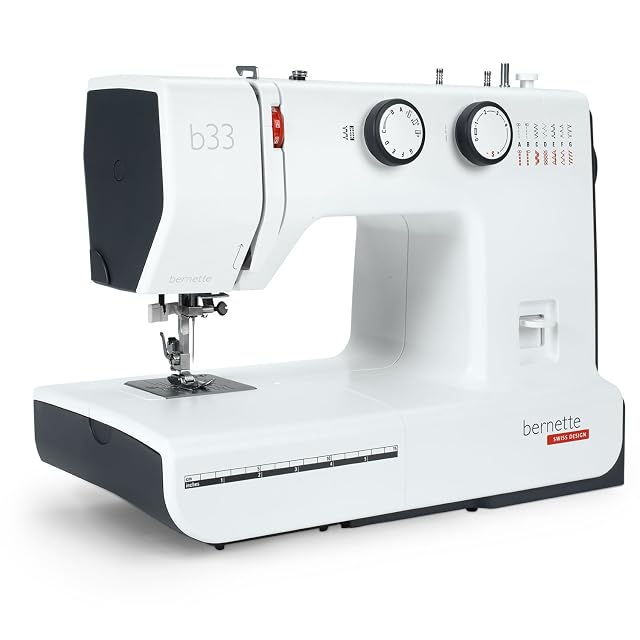
  1. Bernette b33

    Mechanical · entry Bernina family

    Bernette's simplest machine and the cheapest way into the Bernina dealer network. One reference across all five European markets; absent from the US.

    Best for: A first machine bought with the next ten years in mind

    7.6/10

    ≈ 280 €

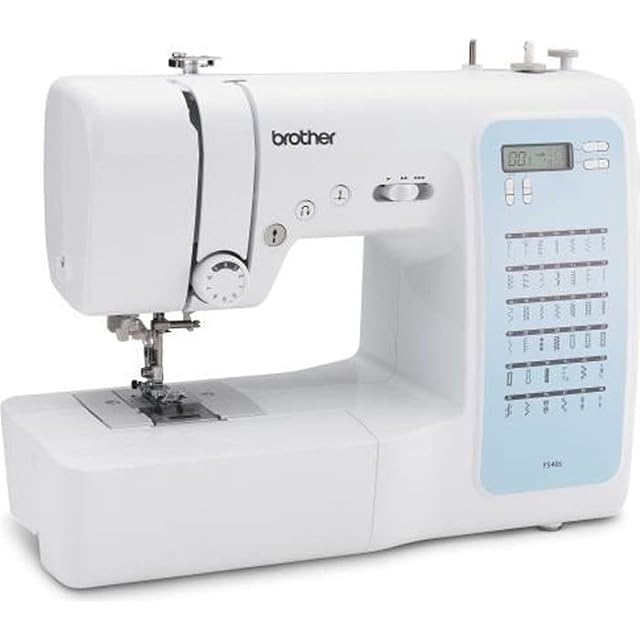
  2. Brother FS40S

    40 stitches · LCD · free arm · 2.95 kg

    Brother's light computerised machine: 40 stitches, an LCD, a needle threader and a free arm, at just under three kilos. One reference on all six Amazon stores we checked.

    Best for: Light dressmaking, alterations and a first machine that has to live in a cupboard

    7.5/10

    ≈ 200 €

Questions people actually ask

What should a first machine have?

A top-loading drop-in bobbin with a clear cover, an automatic needle threader, and ideally a one-step buttonhole. Those three remove the operations beginners most often get wrong. Stitch count is irrelevant — you will use four.

Mechanical or computerised to start?

Either works. The one feature that justifies computerised is the one-step buttonhole that measures your button, because buttonholes are where beginners lose garments. Everything else is convenience.

How many stitches does a beginner need?

In practice three or four: straight, zigzag, a buttonhole and reverse. Long stitch lists mostly add price rather than capability.

Mechanical or electronic for a first machine?

Either works. Mechanical is simpler and often cheaper to service; electronic adds convenience such as needle positioning and easier buttonholes.

Does a heavier machine sew better?

Weight is not the point, but a very light machine tends to move as you sew, which makes straight lines harder while you are learning.

Why does my stitching look bad?

Usually threading, a blunt needle, or the wrong needle for the fabric. Rethreading with the presser foot up solves a surprising share of problems.

Should I buy second-hand?

It can be excellent value, especially older mechanical machines, provided you can have it serviced and the accessories are still available.

Will I outgrow a cheap machine?

Possibly, and that is a good outcome rather than a waste. Knowing what you actually need is much easier after a year of sewing.

Why each one, and for whom

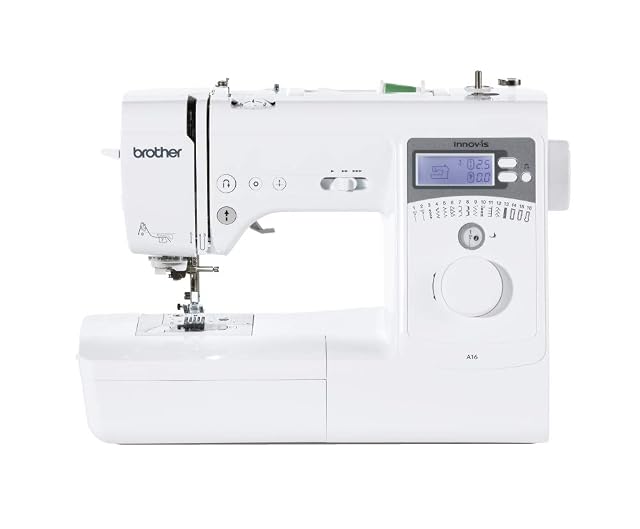
Brother Innov-is A16 · 450 €

For : A first machine in Europe, bought without worrying about which country you are in

Main strength : One reference across all five European markets including the UK

Main limitation : Absent from amazon.com

Read the full review →

Bernette b33 · 280 €

For : A first machine bought with the next ten years in mind

Main strength : One reference across every European market we checked

Main limitation : Absent from amazon.com

Read the full review →

Brother FS40S · 200 €

For : Light dressmaking, alterations and a first machine that has to live in a cupboard

Main strength : Available under a single reference on all six markets we checked — rare

Main limitation : Under three kilos means a plastic-framed chassis, with the stability that implies

Read the full review →

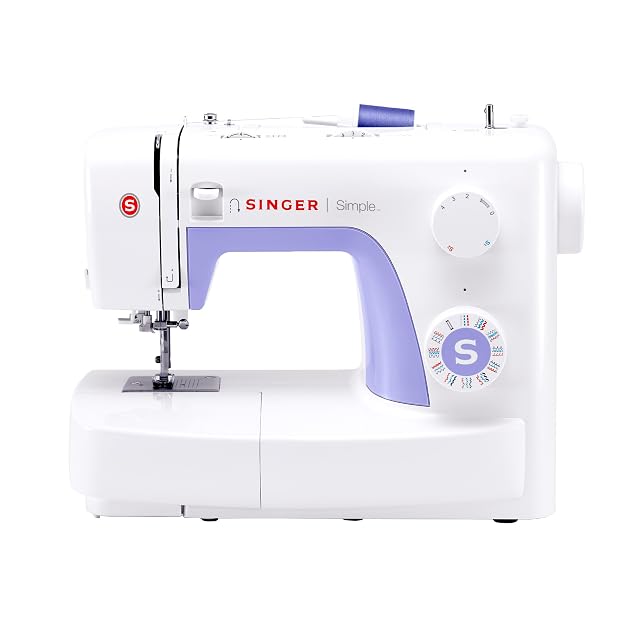
Singer Simple 3232 · 200 €

For : Occasional repairs and light dressmaking on a small budget

Main strength : One reference across every European market we checked

Main limitation : Plastic body — this is not the Heavy Duty chassis

Read the full review →

What each price bracket buys

What you will need with it

Consumables and protective gear from the same aisle, at the price we recorded. Check compatibility with the model you choose before ordering: it depends on the fitting and the part number, which the product page states.

Deciding in one line

Useful comparisons

Head-to-heads already published between two models from this guide or this aisle.

How this guide is built

The models here come from the catalogue of this site. Specifications are those published by the manufacturer and on the Amazon product page; prices are what Keepa reported on the date below, and both move. The ranking uses declared specifications, the balance of stated strengths and limitations, and price. No product on this site has been physically tested, and nothing here claims otherwise.

Last checked on

The tool we use ourselves

Chosen your machine? Now buy it at the right price.

Sewing machines and overlockers swing by a hundred euros or more across the year, and the biggest "discounts" often land at prices the same model sold for six weeks earlier. UniverTrack tracks the real price history across retailers, spots fake reductions, and alerts you when it is genuinely the moment to buy.

Real price historyBuy-now alertsAI buying assistant
Try free for 14 days →
No commitment · Cancel in one click · 5 languages