A serger, also called an overlock machine, is what makes home-sewn clothes stop looking home-sewn. The decision is mostly about threading: a serger you cannot rethread stays in its box.
How we chose. We ranked home sergers on Amazon.com on threading first — lay-in tensions and lower looper threaders — then on differential feed, 2-thread capability and the owner record.
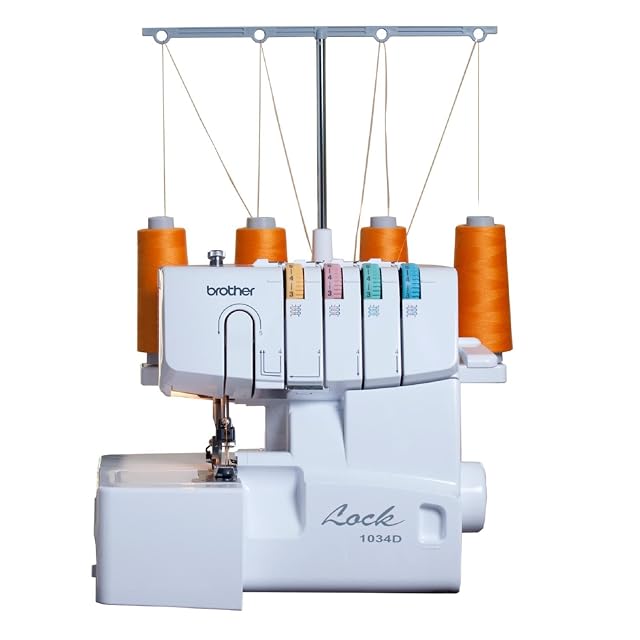
Our first choice: the Brother 1034D. A 3- or 4-thread serger with a metal frame, a lay-in thread system with color-coded guides and a lower looper threader, at up to 1,300 stitches per minute, with standard, gathering and blind stitch feet. More than 12,000 owners rate it above four and a half stars.
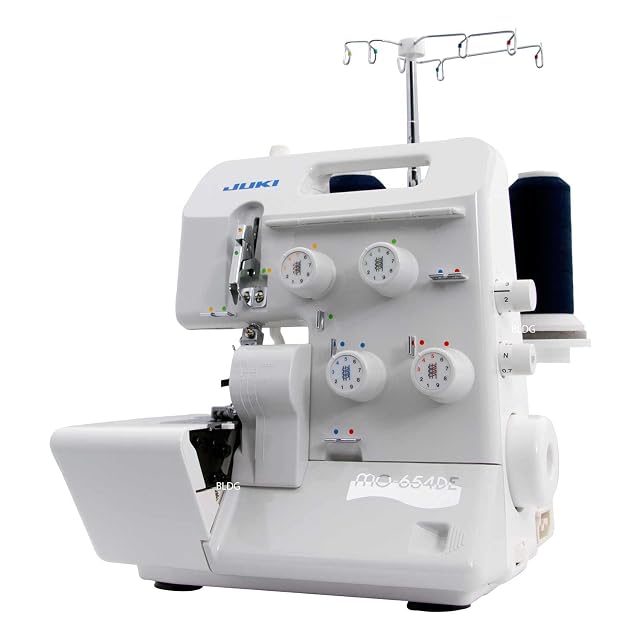
The step up: the Juki MO-654DE. 2-, 3- or 4-thread stitching, an automatic rolled hem, a dedicated knife drive, differential feed from 0.7 to 2.0 and a top speed of 1,500 spm, with more than 1,200 ratings.
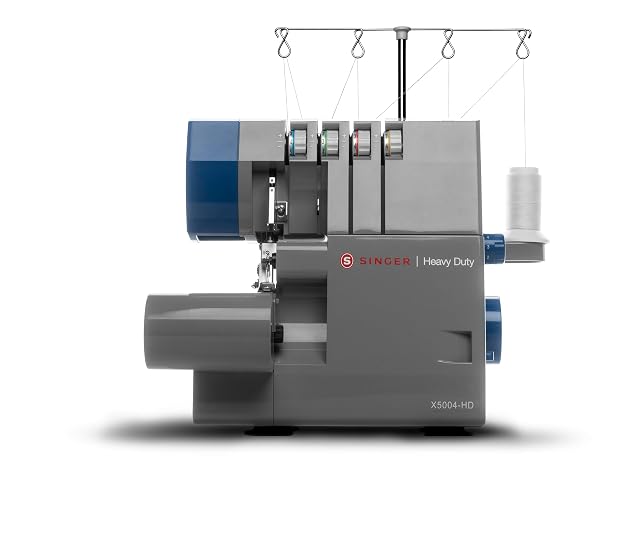
For thick fabric: the Singer X5004-HD. 2-, 3- or 4-thread stitching, six stitch types, a metal frame and a cutting knife Singer says is 60% larger than standard.
Worth knowing. The Elna 664PRO publishes the widest differential feed range; the bernette b48 adds coverstitch.
A serger finishes seams in a way a sewing machine cannot, and it is the usual second machine.
You sew knits and jersey
This is where a serger becomes close to essential rather than merely useful.
You are put off by threading
Look for air threading or color-coded paths, because threading is the reason many sergers sit unused.
You sew occasionally
A zigzag or overcasting stitch on your sewing machine covers seam finishing perfectly acceptably.
Picking by what you sew
Finishing seam edges
The main use. It trims, sews and overcasts in one pass, which is what makes garments look finished inside.
Sewing knits
Where the stretch of a serged seam is what keeps a jersey garment from popping stitches.
Rolled hems
Where a serger does in seconds what is fiddly on a sewing machine.
Speed
Where a serger’s pace genuinely shortens a project, provided you are not fighting the threading.
What matters once you start stitching
How it threads
The single biggest practical difference. Air threading, color-coded paths and a lay-in lower looper all reduce the friction that stops people using it.
Differential feed
Adjusts how the two sets of feed dogs move relative to each other. It is what prevents wavy knits and gathered edges.
Number of threads
Four threads covers most garment sewing. Two and three thread options add versatility, and more threads add complexity.
Cutting width and stitch length adjustment
How much the knife trims and how the stitch sits. Both matter for different fabric weights.
Whether it will get used
A serger that intimidates you sits in a closet. That is worth weighing more than any specification.
Which figure for which fabric
Your sewing
The machine
The feature
Garments in woven fabric
A four-thread serger
Seam finishing
Knits and jersey
A serger
Differential feed
Occasional sewing
Your existing machine
Zigzag or overcast stitch
Put off by threading
Air threading if affordable
It decides whether you use it
Where sewers go wrong
Cutting into the garment
The knife trims as it sews. A moment’s inattention takes a slice out of the piece, and it is the classic serger accident.
Threading in the wrong order
Sergers must be threaded in a specific sequence. Doing it out of order produces a mess that looks like a fault.
Ignoring differential feed
It is the dial that fixes wavy knit edges and gathered seams, and many owners never touch it.
Buying one you will not thread
An intimidating serger sits unused. Ease of threading is a legitimate purchase criterion, not a luxury.
By the sewer you are
The garment maker
Uses it on every project and considers it the second essential machine.
The knit sewer
Needs differential feed and the stretch of a serged seam.
The occasional sewer
Is well served by an overcasting stitch on their sewing machine.
Oiling, servicing and working life
Sergers produce enormous amounts of lint because they trim as they sew, and that lint goes everywhere inside the machine. The knife also dulls, and a dull knife chews the edge rather than cutting it.
Clean out the trimmings and lint after every session; sergers fill up fast.
Replace the knife when the cut edge starts looking chewed rather than clean.
Use good quality thread; sergers are less forgiving of cheap thread than sewing machines.
Oil at the points the manual marks, since these machines run fast.
Safety
A machine with a blade and multiple needles running very fast.
Keep fingers well clear of the knife, which is sharp and always cutting.
Unplug before threading a difficult loop or clearing a jam.
Close the front cover before running; it is a guard, not a convenience.
Watch what is under the knife constantly; it cuts whatever reaches it.
America's best-known home serger: a 3- or 4-thread machine with a metal frame, a lay-in thread system, a lower looper threader, 1,300 stitches per minute and three snap-on feet.
Best for: A first serger for knits, seam finishing and rolled hems
Juki's long-running home serger: 2, 3 or 4 threads, an automatic rolled hem, a breakaway lower looper, a dedicated knife drive, 1,500 stitches per minute and a cover safety switch.
Best for: Knit garments and seam finishing for someone who wants Juki's stitch quality
Singer's heavy-duty serger: 2-, 3- or 4-thread stitching, six stitch types, a heavy-duty metal frame, a cutting knife Singer says is 60% larger than standard, and 1,300 stitches per minute.
Best for: Serging thick fabric and denim, with 2-thread finishes when needed
Feet, needles and bobbins from the same aisle, at the price we noted. Check they fit the machine you pick before ordering: it depends on the shank and the part number, which the listing states.
The machines here come from the catalog of this site. Specifications are the ones the maker publishes and the ones on the Amazon page; prices are the Keepa reading for the date below, and both change. Ranking rests on declared specifications, on the weight of stated strengths against stated limits, and on price. No machine here has been sewn on by us, and nothing here says it has.