bernette's combination machine: serger, coverstitch and chain stitch in one, with 23 stitch functions, 1,300 stitches per minute, adjustable foot pressure and knife control.
Everything below is either a specification from the Amazon.com listing, cited as such, or our reading of what it means for your sewing.
What the listing states. A combination serger, coverstitch and chain stitch machine with 23 stitch functions — overlock, coverstitch, chain and combination options — speeds up to 1,300 stitches per minute, adjustable presser foot pressure, knife control, a manual threader and LED lighting.
What a combination machine is. One machine that serges seams and also sews coverstitch hems — the parallel rows on T-shirt and legging hems. On most machines that means two separate purchases. See what a coverstitch is and serger or coverstitch first.
The trade-off. Converting from serger to coverstitch usually means disengaging the knife, changing needles, rethreading the loopers and changing settings. If you hem every knit garment you serge, that conversion happens on every project. Two dedicated machines avoid it.
What the listing leaves out. Differential feed range, stitch length, cutting width and the box contents beyond “included accessories”.
The record. About forty owner ratings on Amazon.com, averaging above four stars — enough to rule out an obvious defect, not enough to describe year five.
Against the alternatives. A Brother 1034D plus a Brother 2340CV coverstitch never needs converting. The b48’s case is space.
Where we would look before buying. How long the conversion takes on the machine itself. Our sergers and coverstitch machines pages compare the alternatives.
What it does, and what it struggles with
Strengths
Serger and coverstitch in one machine
Chain stitch and combination stitches
Adjustable foot pressure
Compromises
Converting between serger and coverstitch takes time
Is a combination machine better than two machines?
It saves space and some money. Switching between serging and coverstitching means rethreading and changing settings each time, so a busy knit sewer often prefers two machines.
What is a chain stitch for?
A strong, stretchy straight seam that unravels easily from one end — useful for basting and for some decorative seams.
Does it do a rolled hem?
Most combination sergers do; the listing does not detail it.
What does knife control mean?
The listing mentions knife control, which usually means disengaging the knife for coverstitching and adjusting cutting width.
Our score
7.8/ 10
A good answer for a small sewing room — if you can live with converting between modes.
The recorded price, among sewing machines
A reference exists on Amazon.com. Listed is not the same as in stock — availability changes daily.
Details checked on November 4, 2026.
Who buys this one, among sewing machines
A sewer short of space who wants both serger seams and coverstitch hems
Sources
Specifications: the manufacturer sheet for sewing machines and the matching Amazon product page. Prices and availability: Keepa. Every figure on this page names its source.
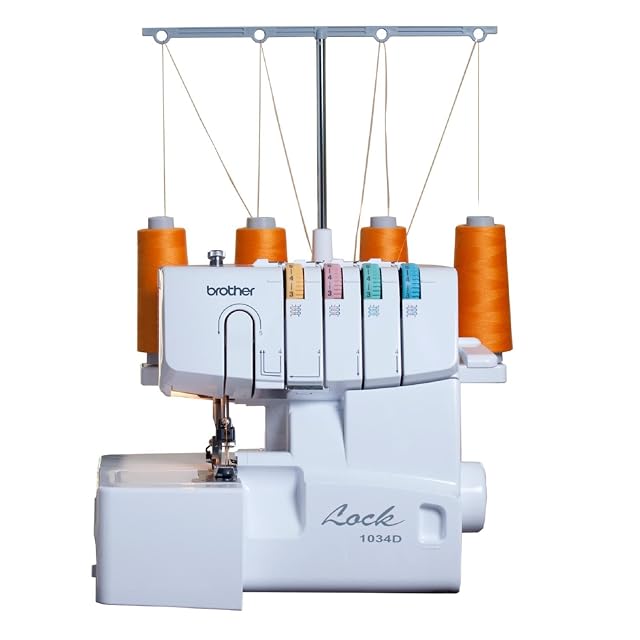
America's best-known home serger: a 3- or 4-thread machine with a metal frame, a lay-in thread system, a lower looper threader, 1,300 stitches per minute and three snap-on feet.
Best for: A first serger for knits, seam finishing and rolled hems
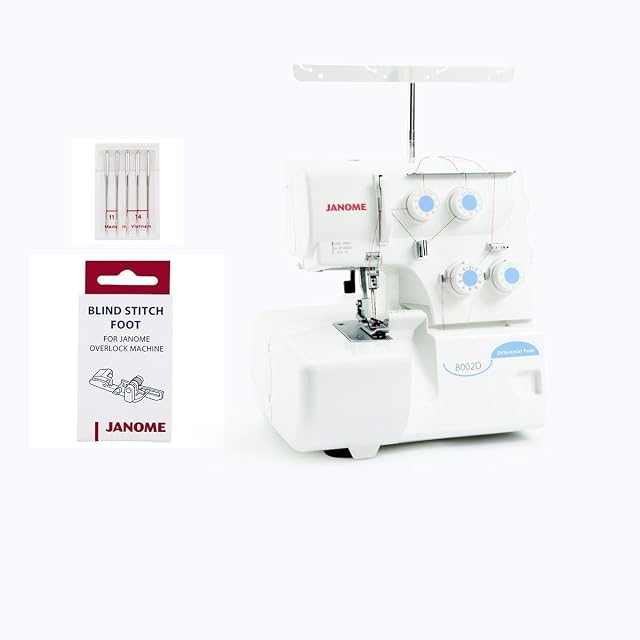
Janome's mechanical entry serger: 3- or 4-thread overlock stitching at up to 1,300 stitches per minute, adjustable differential feed, color-coded threading and clearly marked tension dials.
Best for: A no-frills first serger for knits and seam finishing
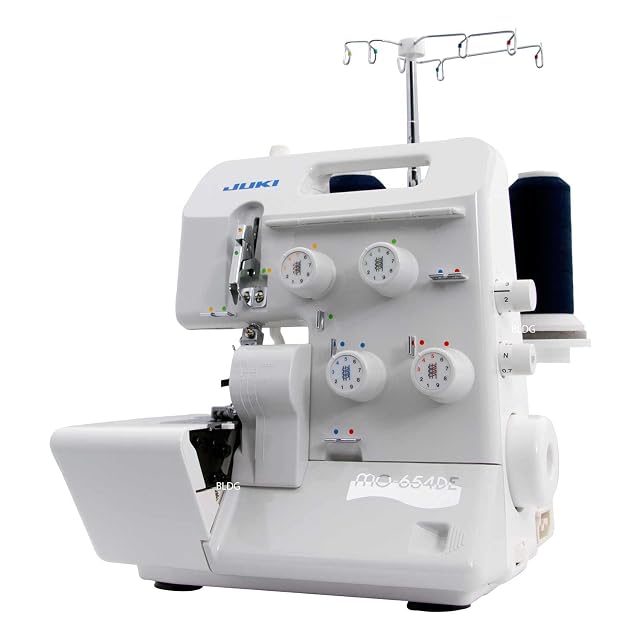
Juki's long-running home serger: 2, 3 or 4 threads, an automatic rolled hem, a breakaway lower looper, a dedicated knife drive, 1,500 stitches per minute and a cover safety switch.
Best for: Knit garments and seam finishing for someone who wants Juki's stitch quality