Janome's mechanical entry serger: 3- or 4-thread overlock stitching at up to 1,300 stitches per minute, adjustable differential feed, color-coded threading and clearly marked tension dials.
Everything below is either a specification from the Amazon.com listing, cited as such, or our reading of what it means for your sewing.
What Janome states. A serger that trims, stitches and finishes seams in one step, with 3- or 4-thread overlock stitches, speeds up to 1,300 stitches per minute, adjustable differential feed to stop puckering on lightweight fabrics and stretching on knits, color-coded threading paths and clearly marked tension dials, in a “reliable mechanical design with straightforward controls”.
What that adds up to. A plain serger without electronics, which is exactly what some buyers want: nothing to go wrong beyond the mechanism, and dials whose positions you can read and write down.
What the listing leaves out. A lower looper threader, a 2-thread stitch, a rolled hem setting, the stitch length range and the feet in the box. We do not assume them.
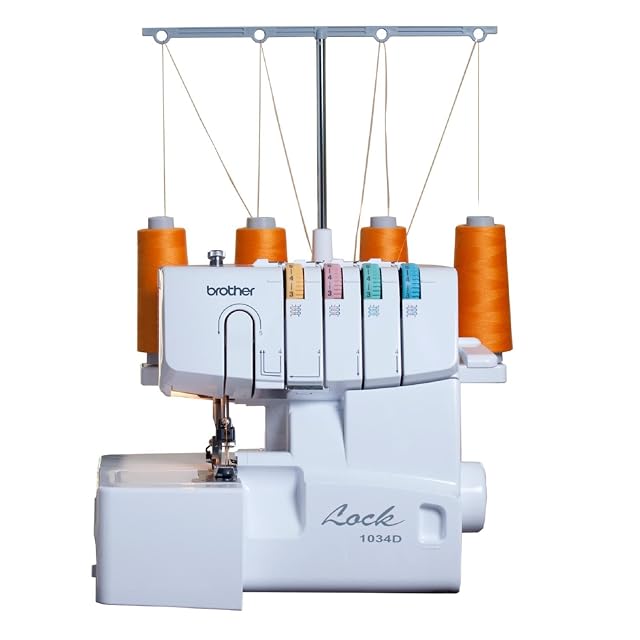
The comparison that decides it. The Brother 1034D is also a 3/4-thread serger at 1,300 spm, and it lists a lower looper threader, a metal frame, rolled hem, three feet and more than twelve thousand owner ratings — usually for less money. On paper, the Brother is the better buy; the Janome’s case is brand preference and simplicity.
The record. Around 160 owner ratings on this listing, averaging above four and a half stars.
Where we would look before buying. The threading diagram for the lower looper — see how to thread a serger. Our sergers page compares the rest.
What it does, and what it struggles with
Strengths
Simple mechanical design with clearly marked dials
Differential feed for knits and lightweight fabric
Janome build
Compromises
No lower looper threader listed
No 2-thread stitch
Fewer listed features than the Brother 1034D
Specifications
Type
Serger (overlock), 3 or 4 thread
Maximum speed
1,300 stitches per minute
Feed
Adjustable differential feed
Threading
Color-coded paths, marked tension dials
Design
Mechanical, straightforward controls
What sewers ask us
8002D or Brother 1034D?
Both are 3/4-thread sergers at 1,300 spm. The Brother lists a lower looper threader, a metal frame, three feet and a far longer record, usually for less.
Does it do a rolled hem?
The listing focuses on 3- and 4-thread overlock and does not detail a rolled hem. Check the manual if rolled hems matter.
Is it good on knits?
Yes — differential feed is what keeps knit seams from waving.
How hard is it to thread?
Color-coded paths help; without a lower looper threader, the lower looper takes practice.
Our score
8.3/ 10
A plain, dependable serger — but on Amazon.com the Brother 1034D does more for less.
The recorded price, among sewing machines
A reference exists on Amazon.com. Listed is not the same as in stock — availability changes daily.
Details checked on November 4, 2026.
Who buys this one, among sewing machines
A no-frills first serger for knits and seam finishing
Sources
Specifications: the manufacturer sheet for sewing machines and the matching Amazon product page. Prices and availability: Keepa. Every figure on this page names its source.
America's best-known home serger: a 3- or 4-thread machine with a metal frame, a lay-in thread system, a lower looper threader, 1,300 stitches per minute and three snap-on feet.
Best for: A first serger for knits, seam finishing and rolled hems
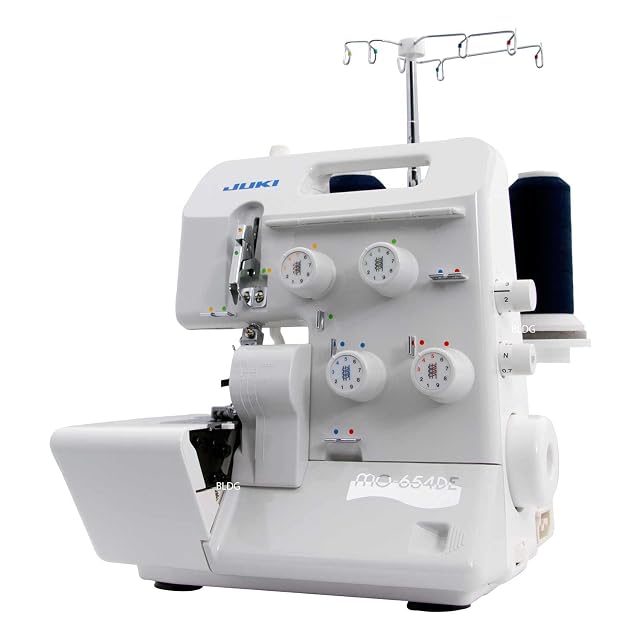
Juki's long-running home serger: 2, 3 or 4 threads, an automatic rolled hem, a breakaway lower looper, a dedicated knife drive, 1,500 stitches per minute and a cover safety switch.
Best for: Knit garments and seam finishing for someone who wants Juki's stitch quality
3/4 thread · lay-in tensions · auto lower looper threader
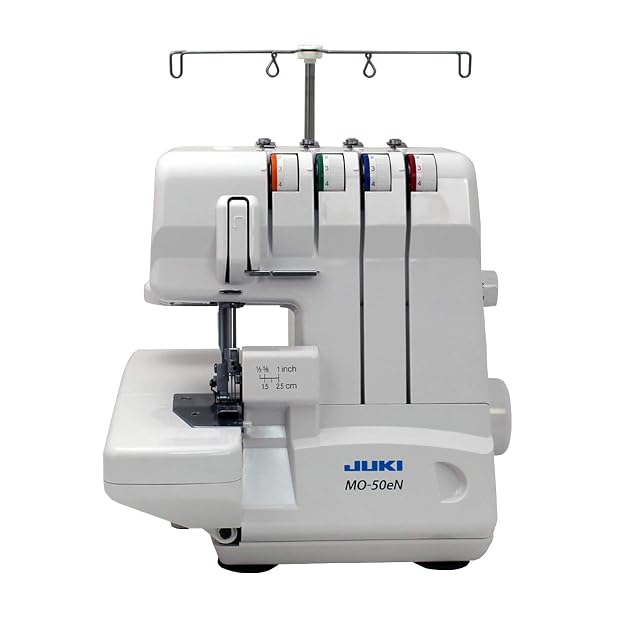
Juki's entry serger: 3 or 4 threads, lay-in tensions, an automatic lower looper threader, adjustable differential feed, a calibrated knife and a built-in rolled hem.
Best for: A first serger from an industrial-grade brand