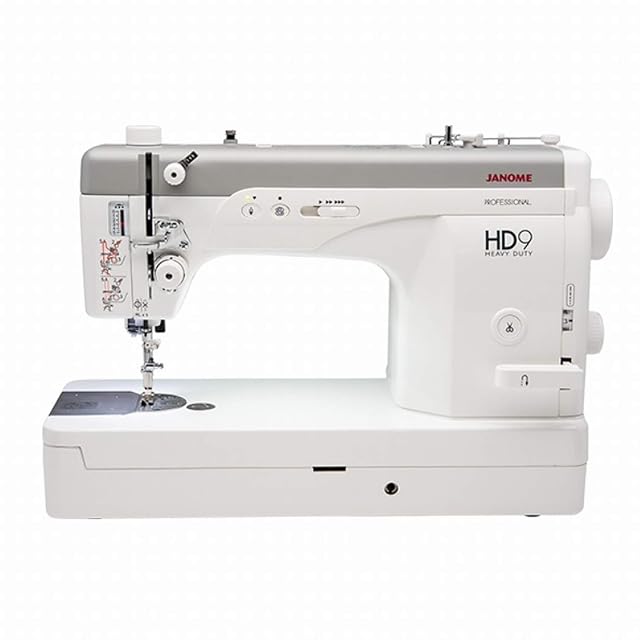
An industrial single-needle straight-stitch machine, sold on all six markets with a servo motor and automatic needle positioning. This is a flatbed industrial, not a heavy domestic machine.
The bottom line A real industrial at a domestic price, provided you have understood that it is a table, not an appliance.
Everything below is either a manufacturer
specification, cited as such, or something we verified ourselves.
What we verified.B07PBCFP7X designates this machine on amazon.de,
.fr, .it, .es and .co.uk, confirmed on EAN in each case. The United States
carries its own reference, B005I5DHPC, listed as the “Juki DDL-8700
Industrial Straight Stitch Sewing Machine”. Six markets out of six, which is
rare in this batch.
What Juki states. An industrial machine described as ideal for fine to
medium-heavy materials. The European listings are for a 220 V servo-motor
configuration with automatic needle positioning, and Juki’s own copy makes a
point of the motor: it runs only while the machine is sewing, with no idling,
where earlier electronic and standard clutch motors ran continuously.
Read the word “industrial” literally. This is a sewing head that mounts into
a table with a stand and a separate motor. Assembled, it occupies about the
footprint of a desk and weighs accordingly. It does not fold away, and it does
not travel. Several of the listings show the complete table; check which
configuration a given seller is shipping before ordering, because head-only and
head-plus-table are both sold under similar titles.
Where we would look before buying. The stated maximum speed and the presser
foot lift, neither published here, and whether the price includes the table —
the single most consequential ambiguity on these listings.
What we like, and what we don't
Strengths
A genuine industrial machine, proven on all six markets we checked
Servo motor rather than a clutch motor: quieter, and it does not idle
The straight seam an industrial lays down is the reason this class exists
Compromises
Straight stitch only — no zigzag, no buttonhole, no reverse pattern
It arrives as a head plus a table and stand: this is furniture, not an appliance
Juki states fine to medium-heavy materials — it is not a leather machine
Servo, 220 V — runs only while sewing, no idling (manufacturer)
Needle positioning
Automatic (listing)
European reference
B07PBCFP7X (DE, FR, IT, ES, GB)
US reference
B005I5DHPC
Questions people actually ask
Is an industrial machine right for home sewing?
Only if the shape of your sewing suits it. It sews one stitch, extremely well, very fast, all day. It will not do a buttonhole, will not zigzag, and cannot be carried to a class — it bolts into a table roughly the size of a desk. If you sew curtains, bags, or garments in runs, it is transformative. If you sew one varied project a month, a domestic machine is the better tool and this one will frustrate you.
What is the difference between a servo motor and a clutch motor?
A clutch motor spins continuously whenever the machine is switched on and engages through a friction plate, so it is loud, wastes power, and is hard to control at low speed. A servo motor runs only when you press the pedal. Juki states exactly that on this listing. For a home workshop it is the difference between a machine you can use in a flat and one you cannot, and it makes slow, controlled stitching genuinely possible.
Our score
8.3/ 10
A real industrial at a domestic price, provided you have understood that it is a table, not an appliance.
Who this one is for
Someone sewing long straight seams in volume who has the floor space for a table
Price and availability
A reference exists on these Amazon stores: France, Germany, Italy, Spain, United Kingdom, United States. Listed is not the same as in stock — availability changes daily.
Details checked on August 11, 2026.
Sources
Specifications: manufacturer sheet and Amazon product page. Prices and availability: Keepa. No product on this site has been physically tested.
Janome's fastest domestic machine at a stated 1,600 stitches per minute, straight stitch only, on eight sealed ball bearings. Absent from the French catalogue; the US has its own reference.
Best for: Quilting and production-style sewing where speed and a clean straight seam are the whole point