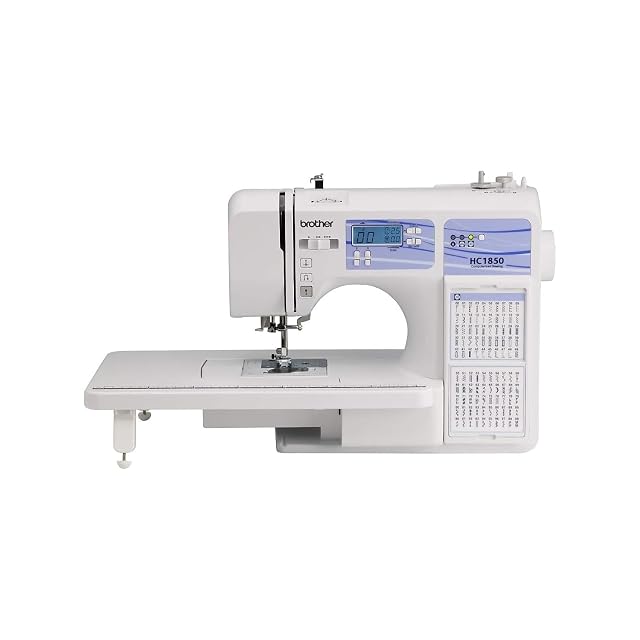
Brother HC1850
185 stitches · 8 buttonholes · threader · LCD · wide table · 8 feet
A long-selling computerized Brother with lettering.
Best for: Quilters and crafters who want lettering
≈ $300
Screen-driven machines · review
Juki's high-end computerized machine: 277 stitches, four alphabet fonts, Juki's box feed system, a built-in straight-stitch plate and an 8-inch throat for quilting.
Where this settles A precise, well-fed machine for demanding sewers — the listing undersells it, so read Juki's full specification before buying.
Everything below is either a specification from the Amazon.com listing, cited as such, or our reading of what it means for your sewing.
What the listing states. 277 built-in stitches, four alphabet fonts, a straight-stitch plate built in, Juki’s box feed system and a large 8-inch throat space. That is all the Amazon.com listing gives in its feature list; it is brief for a machine at this price.
What box feed means. On most machines the feed dogs move in an oval: up, back, down, forward. Juki’s box feed moves them in a rectangle, staying in contact with the fabric for longer on each stitch. The practical result is more even feeding on layers, slippery fabric and quilts — the problems a walking foot is usually bought to solve. See what feed dogs are and how they work.
What the built-in straight-stitch plate does. It switches the needle opening from the wide slot zigzag needs to a small round hole. Fine fabric is then not pushed down into the plate at the start of a seam, and straight stitching on silk and lawn is cleaner. On most machines this is a separate plate you swap by hand.
Throat space. About 8 inches between the needle and the body — more than the 6 or so of a standard domestic machine — so a rolled quilt passes under the arm more easily. See what throat space is.
Against the alternatives. For pure quilting, the straight-stitch Juki TL-2010Q is faster and has more throat space. For mixed sewing, the Brother CS7000X is the comparison.
Owner ratings. About 160 on Amazon.com, averaging a little above four stars.
Where we would look before buying. Juki’s full specification sheet and a dealer test sew. Our computerized sewing machines page ranks it against the rest.
| Type | Computerized |
|---|---|
| Built-in stitches | 277 |
| Fonts | 4 alphabets |
| Feed | Box feed system |
| Needle plate | Straight stitch plate built in |
| Throat space | About 8 in |
Juki's feed system in which the feed dogs move in a rectangular path, gripping the fabric for longer on each stitch, so layers and fine fabric feed more evenly.
It switches the needle hole from a wide zigzag slot to a small round hole, so fine fabric is not pushed down into the plate and straight stitching is cleaner.
For a domestic machine, yes. It lets a rolled quilt pass under the arm more easily than a standard 6-inch throat.
The TL-2010Q is a straight-stitch-only machine with more throat space and higher speed; the DX7 adds 277 stitches and fonts. Pure quilters lean to the TL; mixed sewers to the DX7.
7.5/ 10
A precise, well-fed machine for demanding sewers — the listing undersells it, so read Juki's full specification before buying.
A reference exists on Amazon.com. Listed is not the same as in stock — availability changes daily.
Details checked on November 4, 2026.
Quilters and garment sewers who want precise feeding on fine and layered fabric
Specifications: the manufacturer sheet for sewing machines and the matching Amazon product page. Prices and availability: Keepa. Every figure on this page names its source.
185 stitches · 8 buttonholes · threader · LCD · wide table · 8 feet
A long-selling computerized Brother with lettering.
Best for: Quilters and crafters who want lettering
≈ $300
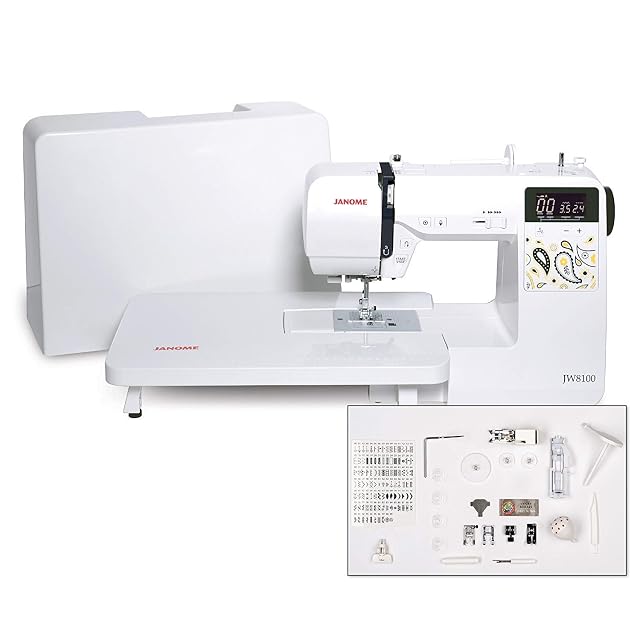
100 stitches · 7 buttonholes · 7-piece feed · walking foot · hard cover
A quilting-ready computerized machine with a walking foot.
Best for: Quilting and garments on a mid budget
≈ $369
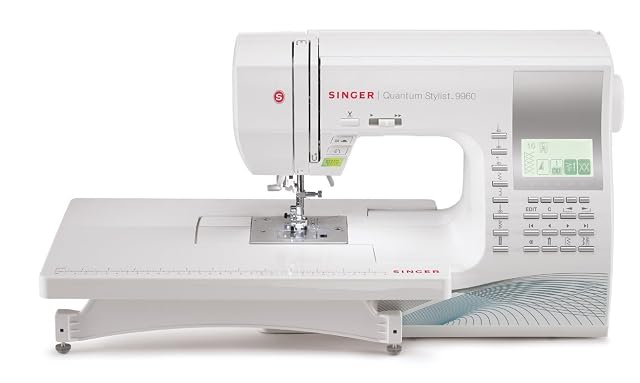
600 stitches · 13 buttonholes · 13 feet · start/stop
Singer's long-running computerized sewing and quilting machine: 600 stitches, 13 one-step buttonholes, a lettering font, speed control, a start/stop button, an extension table and thirteen feet.
Best for: Quilters and garment sewers who want every foot and feature in one box