A serger makes lint as fast as it makes seams. It trims the fabric edge as it sews, so the knife area and loopers fill up quickly. Most serger problems — uneven stitches, thread breaking, skipped stitches — begin there.
After every project: brush it out
- Unplug the serger.
- Open the front cover and the side cover if it has one.
- Brush out the lint around the loopers, knives and feed dogs with a lint brush. Work outward.
- Empty the trim catcher, if your serger has one.
Do not blow into it, and avoid canned air, which pushes lint deeper.
Oil where the manual shows
Many sergers have marked oiling points. Put one drop at each, run the serger for a few seconds without thread, then sew on scrap to absorb any excess. Use sewing machine oil only — see sewing machine oiling.
Needles
- Use the type your manual specifies. Many home sergers take standard 130/705 H needles; others, especially coverstitch machines, need ELx705 needles.
- Change them regularly, and immediately after hitting a pin.
- Insert each needle fully up into its slot; a needle that is slightly low causes skipped stitches.
Knives
The moving upper knife wears faster than the fixed lower one. Replace it when it starts chewing fabric instead of cutting cleanly. Never serge over pins: one pin can nick the knife.
Threading in the right order
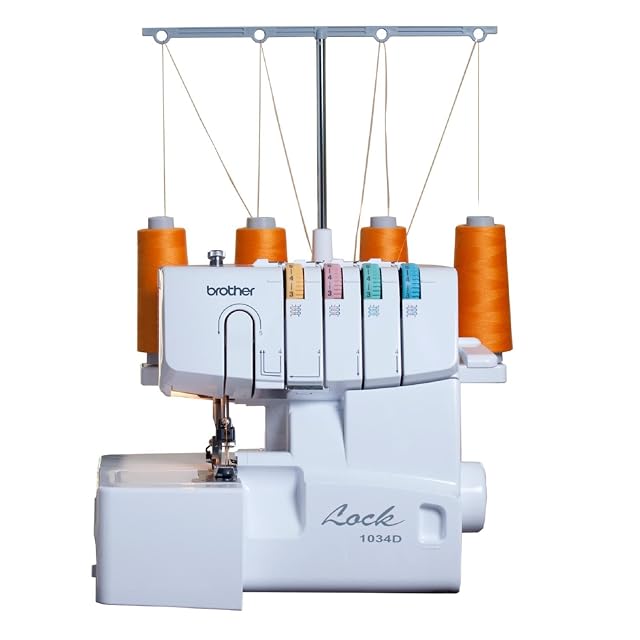
Follow the order in your manual. On many four-thread sergers — the Brother 1034D among them — it is upper looper, lower looper, right needle, left needle. When one looper thread breaks, unthread the needles first, rethread the looper, then rethread the needles.
The tie-on trick: to change colors, cut each thread near the spool, tie the new thread on, and pull the knots through gently with the presser foot raised.
Thread
Use serger thread on cones, which is finer and longer than all-purpose thread. Cheap cones shed lint and break; see our serger parts page and the Madeira Aerolock cones.
Storing it
Cover it between sessions and store it in a dry room. Leave the threads in place; rethreading from scratch is the slow part.
When it needs a technician
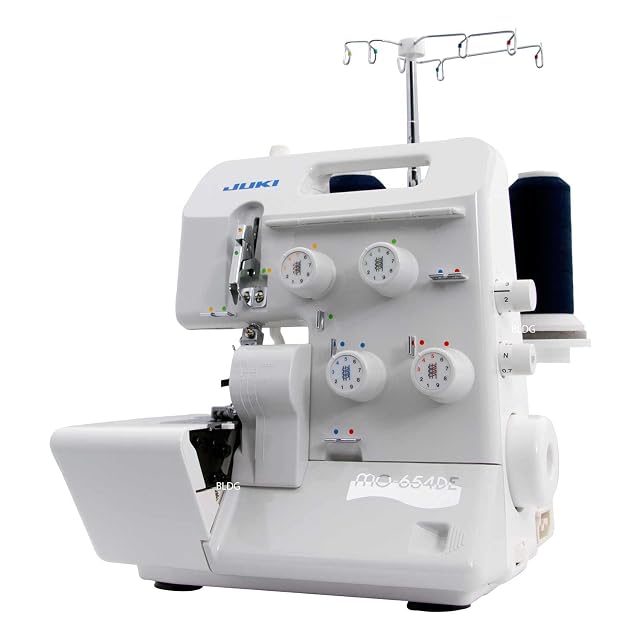
If a clean, correctly threaded serger still skips stitches, the needles hit the loopers or the timing sounds wrong, take it to a dealer. A Juki MO-654DE or bernette Funlock is worth servicing; see our sergers page for the models we review.
What sewers ask us
In what order do I thread a serger?
Follow your manual. On many four-thread sergers, including the Brother 1034D, the order is upper looper, lower looper, right needle, left needle. Threading the loopers out of order is a common cause of thread breaking.
Which needles does a serger use?
It depends on the model. Many home sergers use standard 130/705 H needles; others need ELx705 needles. Check the manual before buying.
How often should I oil a serger?
As the manual says — often after several hours of sewing, a drop at each marked point. Sew on scrap afterward to absorb any excess oil.
When should I replace the knife?
When it starts chewing or tearing the fabric edge instead of cutting it cleanly. On most home sergers the lower, stationary knife lasts much longer than the upper, moving one.
Last reviewed