Skip to content

The best mechanical sewing machines

A mechanical machine has fewer things that can break and almost nothing that can go out of date. Judge them on frame and on whether a local shop can still service them in a decade.

A mechanical machine has fewer things that can break and almost nothing that can go out of date. Judge them on frame and on whether a local shop can still service them in a decade.

Which one do you need?

You want simplicity
A mechanical machine has dials rather than menus, and nothing to update or reset.
You want it serviced anywhere
Mechanical machines are the ones most repairers will still work on without a proprietary diagnostic.
You sew occasionally
A mechanical machine sitting unused for months is far less likely to have developed a problem.
You want fine control of speed
The foot pedal is your control, and mechanical machines rely on it entirely, which some sewers prefer.

Choosing by use

General sewing

Hems, seams, repairs and simple garments. A mechanical machine does all of it without any menu.

Teaching

Where dials you can see and touch make the relationship between stitch length, width and result obvious.

Occasional use

Where a machine that is simple and sits in a cupboard for months is more likely to just work when taken out.

Heavier fabric within reason

Where a solid mechanical machine with the right needle handles more than its price suggests.

The criteria that actually matter

Build and weight
A metal internal frame resists flexing and vibration. It is the difference you feel rather than read on a specification.
The buttonhole method
Four-step buttonholes are common on mechanical machines and take practice. A one-step version, where offered, is easier.
Stitch length and width adjustment
Continuous adjustment rather than fixed steps gives real control, and it matters more than the number of stitch patterns.
Presser foot pressure
Adjustable pressure helps enormously with very thin and very thick fabrics. Not all machines offer it, and it is worth checking.
The bobbin system
Front-loading and drop-in bobbins both work. Drop-in is easier to see and thread; front-loading is often easier to adjust tension on.

Which criterion for which use

Your priorityWhat to look forWhy
LongevityA metal internal frameLess flex and vibration
Ease of learningA one-step buttonholeFour-step takes practice
Fine controlContinuous length and widthSteps limit you
Difficult fabricsAdjustable foot pressureThin and thick both need it

Mistakes to avoid

Assuming mechanical means weak
A solid mechanical machine handles a great deal, and it is the fabric, the needle and the technique that usually set the limit.
Fighting a four-step buttonhole
It works well once practised, and practising on a scrap of the same fabric is what makes the difference.
Ignoring tension adjustment
Mechanical machines expect you to adjust the top tension for different threads and fabrics. That dial is there to be used.
Never having it serviced
A mechanical machine that has run for years without a service will be stiff and out of timing long before it actually fails.

Choosing by profile

The pragmatist
Wants a machine with dials, no menus, and a repairer down the road.
The teacher
Wants visible controls so a learner can see cause and effect directly.
The occasional sewer
Wants something that works when taken out of a cupboard twice a year.

Upkeep and how long it lasts

Mechanical machines reward regular cleaning and oiling and tolerate neglect badly. Lint compacts under the needle plate, and old oil gums up until the handwheel is stiff, which is a repairable state but an avoidable one.

  • Remove the needle plate and brush out the feed dog area; that is where lint packs.
  • Oil at the points the manual marks, with sewing machine oil only.
  • Run a few stitches on scrap after oiling so excess oil does not mark fabric.
  • Have it serviced periodically rather than only when it stops.

Safety

Simple machines are still fast machines.

  • Unplug before removing the needle plate or clearing a jam.
  • Keep fingers away from the needle and guide fabric from the side.
  • Remove pins before they reach the foot rather than sewing over them.
  • Check the power lead; older machines often have hardened or cracked cables.

What we recommend, and why

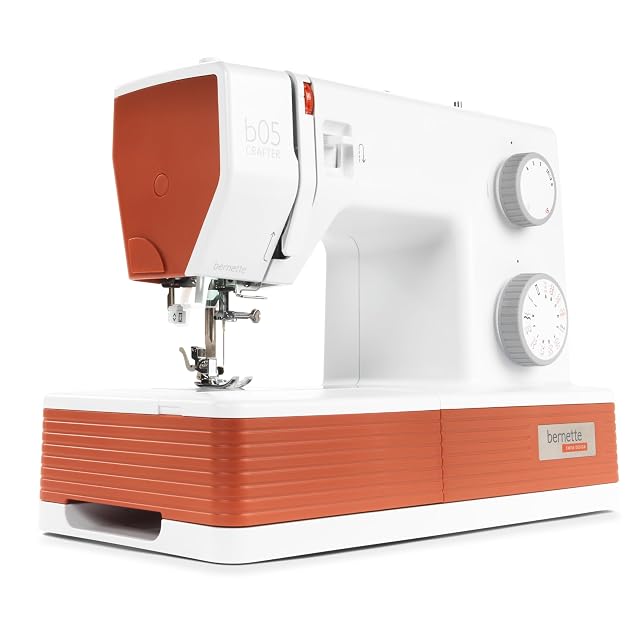
  1. Bernette b05 Crafter

    Mechanical · portable · Bernina network

    Bernette's portable mechanical machine, and one of only three products on this site available under a single reference on all six Amazon stores.

    Best for: Dressmaking and everyday sewing where stitch quality matters more than power

    7.9/10

    ≈ $350 / 400 €

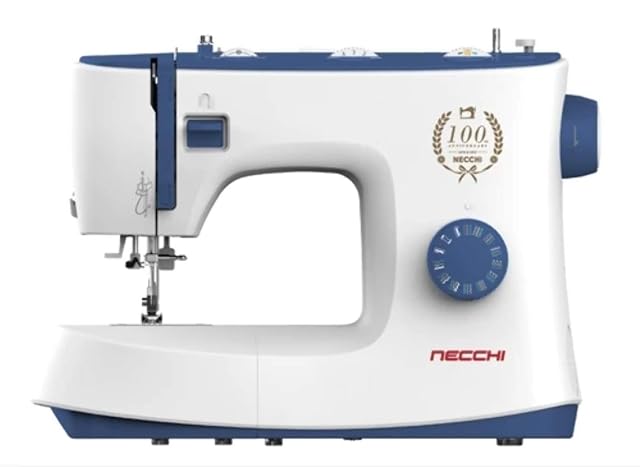
  2. Necchi K432A

    Mechanical · die-cast aluminium interior

    An Italian-badged mechanical machine built around a die-cast aluminium internal frame. One reference across all five European markets.

    Best for: Someone who wants a metal-framed mechanical machine outside the usual two brands

    7.6/10

    ≈ 220 €

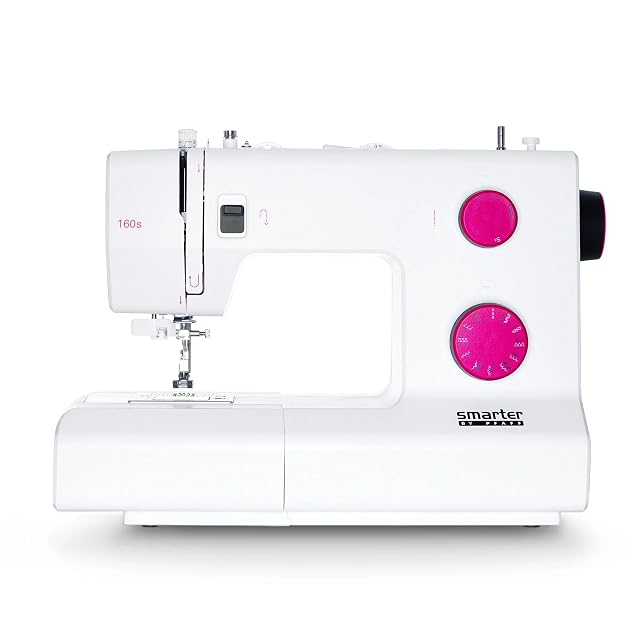
  3. Pfaff Smarter 160S

    Mechanical · 3.0 kg · 22 × 30.5 × 27.3 cm

    Pfaff's entry mechanical machine, and the brand's cheapest route in. Sold under one reference across continental Europe and the US, with a separate UK listing.

    Best for: A first machine for someone who wants a local dealer behind it

    6.6/10

    ≈ £275 / 300 €

Questions people actually ask

Mechanical or computerised?

Mechanical if you value simplicity and repairability, computerised if you sew buttonholes often. The one-step measured buttonhole is the single feature that genuinely justifies the step up.

How do I judge build quality without handling one?

Weight, and whether the manufacturer states a metal or die-cast frame rather than "metal parts". Both are proxies, and both are more informative than a stitch count.

Is a mechanical machine less capable?

Not for ordinary sewing. It has fewer conveniences and fewer decorative stitches, but the stitch quality on a solid machine is not the compromise.

What is a four-step buttonhole?

A buttonhole sewn in four separate passes, with you turning a dial between each. It works well but takes practice on a scrap first.

Do mechanical machines need oiling?

Most do, at the points the manual marks and with sewing machine oil only. Many modern electronic machines do not, which is a genuine difference.

Are older machines worth buying?

Often yes. Many older mechanical machines are solidly built and easy to service, provided accessories and bobbins are still available.

Can it sew denim?

Within reason, with a needle designed for heavy fabric and a slow, steady pace. The needle matters more than the machine's badge.

Why is my handwheel stiff?

Usually old, gummed oil or packed lint. It is a service job rather than a fault, and it gets worse if the machine keeps being used.

Why each one, and for whom

Bernette b05 Crafter · $350

For : Dressmaking and everyday sewing where stitch quality matters more than power

Main strength : Available under one reference on every market we checked

Main limitation : Bernette publishes little detail on this listing

Read the full review →

Necchi K432A · $220

For : Someone who wants a metal-framed mechanical machine outside the usual two brands

Main strength : Die-cast aluminium frame, stated on the listing rather than implied

Main limitation : Absent from amazon.com

Read the full review →

Pfaff Smarter 160S · $275

For : A first machine for someone who wants a local dealer behind it

Main strength : The cheapest way into the Pfaff dealer network, which matters over a decade

Main limitation : Pfaff publishes almost nothing about this listing — no stitch count, no buttonhole type

Read the full review →

What each price bracket buys

Entry level

$175 – $225

3 models

Mid range

$235 – $270

3 models

What you will need with it

Consumables and protective gear from the same aisle, at the price we recorded. Check compatibility with the model you choose before ordering: it depends on the fitting and the part number, which the product page states.

Deciding in one line

Useful comparisons

Head-to-heads already published between two models from this guide or this aisle.

How this guide is built

The models here come from the catalogue of this site. Specifications are those published by the manufacturer and on the Amazon product page; prices are what Keepa reported on the date below, and both move. The ranking uses declared specifications, the balance of stated strengths and limitations, and price. No product on this site has been physically tested, and nothing here claims otherwise.

Last checked on

The tool we use ourselves

Chosen your machine? Now buy it at the right price.

Sewing machines and overlockers swing by a hundred euros or more across the year, and the biggest "discounts" often land at prices the same model sold for six weeks earlier. UniverTrack tracks the real price history across retailers, spots fake reductions, and alerts you when it is genuinely the moment to buy.

Real price historyBuy-now alertsAI buying assistant
Try free for 14 days →
No commitment · Cancel in one click · 5 languages