Skip to content

The best overlockers

An overlocker is what makes home-sewn clothes stop looking home-sewn. The decision is almost entirely about threading: a machine you cannot re-thread is a machine that stays in its box.

An overlocker is what makes home-sewn clothes stop looking home-sewn. The decision is almost entirely about threading: a machine you cannot re-thread is a machine that stays in its box.

Which one do you need?

You make clothes
An overlocker finishes seams in a way a sewing machine cannot, and it is the usual second machine.
You sew knits and jersey
This is where an overlocker becomes close to essential rather than merely useful.
You are put off by threading
Look for air threading or colour-coded paths, because threading is the reason many overlockers sit unused.
You sew occasionally
A zigzag or overcasting stitch on your sewing machine covers seam finishing perfectly acceptably.

Choosing by use

Finishing seam edges

The main use. It trims, sews and overcasts in one pass, which is what makes garments look finished inside.

Sewing knits

Where the stretch of an overlocked seam is what keeps a jersey garment from popping stitches.

Rolled hems

Where an overlocker does in seconds what is fiddly on a sewing machine.

Speed

Where an overlocker's pace genuinely shortens a project, provided you are not fighting the threading.

The criteria that actually matter

How it threads
The single biggest practical difference. Air threading, colour-coded paths and a lay-in lower looper all reduce the friction that stops people using it.
Differential feed
Adjusts how the two sets of feed dogs move relative to each other. It is what prevents wavy knits and gathered edges.
Number of threads
Four threads covers most garment sewing. Two and three thread options add versatility, and more threads add complexity.
Cutting width and stitch length adjustment
How much the knife trims and how the stitch sits. Both matter for different fabric weights.
Whether it will get used
An overlocker that intimidates you sits in a cupboard. That is worth weighing more than any specification.

Which criterion for which use

Your sewingThe machineThe feature
Garments in woven fabricA four-thread overlockerSeam finishing
Knits and jerseyAn overlockerDifferential feed
Occasional sewingYour existing machineZigzag or overcast stitch
Put off by threadingAir threading if affordableIt decides whether you use it

Mistakes to avoid

Cutting into the garment
The knife trims as it sews. A moment's inattention takes a slice out of the piece, and it is the classic overlocker accident.
Threading in the wrong order
Overlockers must be threaded in a specific sequence. Doing it out of order produces a mess that looks like a fault.
Ignoring differential feed
It is the dial that fixes wavy knit edges and gathered seams, and many owners never touch it.
Buying one you will not thread
An intimidating overlocker sits unused. Ease of threading is a legitimate purchase criterion, not a luxury.

Choosing by profile

The garment maker
Uses it on every project and considers it the second essential machine.
The knit sewer
Needs differential feed and the stretch of an overlocked seam.
The occasional sewer
Is well served by an overcasting stitch on their sewing machine.

Upkeep and how long it lasts

Overlockers produce enormous amounts of lint because they trim as they sew, and that lint goes everywhere inside the machine. The knife also dulls, and a dull knife chews the edge rather than cutting it.

  • Clean out the trimmings and lint after every session; overlockers fill up fast.
  • Replace the knife when the cut edge starts looking chewed rather than clean.
  • Use good quality thread; overlockers are less forgiving of cheap thread than sewing machines.
  • Oil at the points the manual marks, since these machines run fast.

Safety

A machine with a blade and multiple needles running very fast.

  • Keep fingers well clear of the knife, which is sharp and always cutting.
  • Unplug before threading a difficult loop or clearing a jam.
  • Close the front cover before running; it is a guard, not a convenience.
  • Watch what is under the knife constantly; it cuts whatever reaches it.

What we recommend, and why

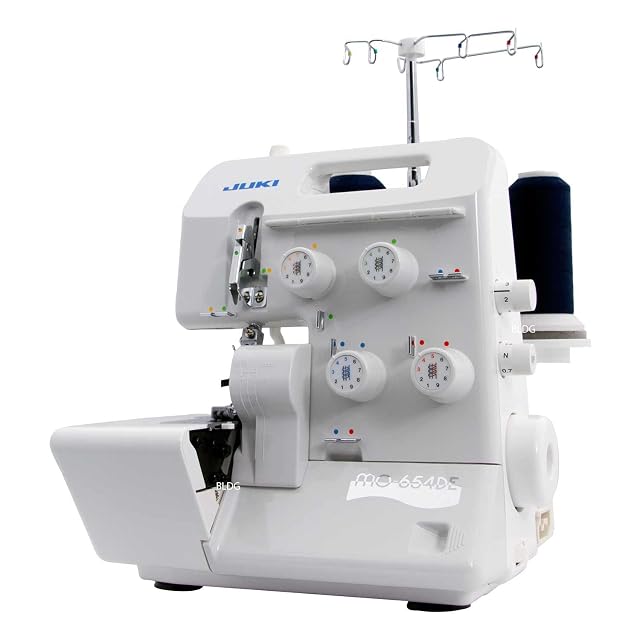
  1. Juki MO-654DE

    2/3/4 thread · 34 × 27 × 29.5 cm

    Juki's domestic overlocker, available under one reference on all six Amazon stores — and the product that exposed a flaw in our own verification method.

    Best for: A first overlocker for knit garments and professional seam finishes

    7.9/10

    ≈ 625 €

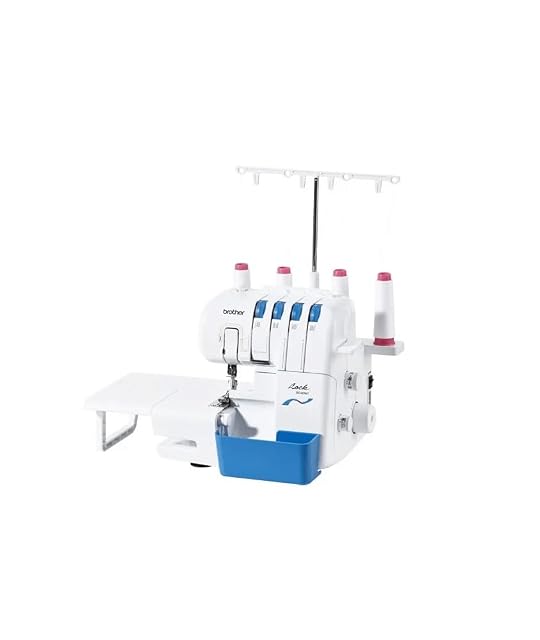
  2. Brother 3034DWT

    3/4 thread · extension table · 3 extra feet

    A 3- and 4-thread overlocker sold with an extension table and three additional feet included. One reference across all five European markets, absent from the US.

    Best for: A first overlocker for knit garments, where the included table and feet remove the usual follow-up purchases

    7.6/10

    ≈ £350 / 515 €

Questions people actually ask

Do I need an overlocker?

Only if you sew knits, or want bought-garment seam finishes. A sewing machine can zigzag a raw edge and it holds. If you sew wovens and finish with a zigzag or pinking shears, you can wait.

Three or four threads?

Four threads construct a knit seam and finish it in one pass. Three finish an edge. Machines that do both cover normal home use, and both machines here do.

Can an overlocker replace a sewing machine?

No. It finishes and joins edges but cannot do buttonholes, topstitching or many construction steps. They are complementary machines.

What is differential feed?

An adjustment to how the two sets of feed dogs move relative to each other. It is what stops knit edges going wavy and prevents unwanted gathering.

Is threading really that hard?

It has a strict order and it intimidates many people. Air threading and colour-coded paths help enormously, and they are worth paying for if threading worries you.

How many threads do I need?

Four covers most garment sewing. Two and three thread options add versatility for rolled hems and lighter finishes.

Why is my overlocked edge chewed?

Often a dull knife, sometimes thread quality or tension. The knife is a consumable and replacing it is routine.

Where should I put an overlocker?

Somewhere it can stay threaded, because rethreading is what stops people using it. That is a practical argument for a permanent spot.

Why each one, and for whom

Juki MO-654DE · 625 €

For : A first overlocker for knit garments and professional seam finishes

Main strength : Available under one reference on every market we checked

Main limitation : Juki does not state the threading method on this listing, and threading is the whole decision

Read the full review →

Brother 3034DWT · 350 €

For : A first overlocker for knit garments, where the included table and feet remove the usual follow-up purchases

Main strength : Extension table included rather than sold separately — unusual at this level

Main limitation : Not listed on amazon.com

Read the full review →

What each price bracket buys

Entry level

240 € – 350 €

2 models

Mid range

360 € – 625 €

2 models

Upper range

700 € – 750 €

2 models

What you will need with it

Consumables and protective gear from the same aisle, at the price we recorded. Check compatibility with the model you choose before ordering: it depends on the fitting and the part number, which the product page states.

Deciding in one line

Useful comparisons

Head-to-heads already published between two models from this guide or this aisle.

How this guide is built

The models here come from the catalogue of this site. Specifications are those published by the manufacturer and on the Amazon product page; prices are what Keepa reported on the date below, and both move. The ranking uses declared specifications, the balance of stated strengths and limitations, and price. No product on this site has been physically tested, and nothing here claims otherwise.

Last checked on

The tool we use ourselves

Chosen your machine? Now buy it at the right price.

Sewing machines and overlockers swing by a hundred euros or more across the year, and the biggest "discounts" often land at prices the same model sold for six weeks earlier. UniverTrack tracks the real price history across retailers, spots fake reductions, and alerts you when it is genuinely the moment to buy.

Real price historyBuy-now alertsAI buying assistant
Try free for 14 days →
No commitment · Cancel in one click · 5 languages