Skip to content

The best computerised sewing machines

Count the buttonhole styles, not the stitches. A machine that measures your button and sews the matching buttonhole in one step is what justifies going computerised; four hundred decorative stitches is not.

Count the buttonhole styles, not the stitches. A machine that measures your button and sews the matching buttonhole in one step is what justifies going computerised; four hundred decorative stitches is not.

Which one do you need?

You want convenience
Needle up-down, automatic tension and one-step buttonholes are what you are actually paying for.
You sew a lot
A speed limiter and a start-stop button without the pedal change how long you can comfortably work.
You want decorative stitches
This is the category that offers them, though most sewers use a small handful in practice.
You want simplicity
A mechanical machine may suit you better, and there is no shame in fewer menus.

Choosing by use

Garment sewing

Where automatic buttonholes, needle positioning and stitch memory genuinely speed up repetitive work.

Quilting and patchwork

Where needle down at every stop and a wider throat make a real difference over hours.

Decorative work

Where the stitch library is the point, and where a good stitch preview screen matters more than the count.

Long sessions

Where a start-stop button and adjustable speed reduce fatigue considerably.

The criteria that actually matter

Needle up-down
The feature experienced sewers name first. Stopping with the needle in the fabric transforms pivoting, corners and quilting.
Speed control
A slider that limits maximum speed lets you work confidently on detail and is genuinely useful for learners too.
The buttonhole system
A one-step buttonhole sized to the actual button is a real convenience, and the sensor foot is what makes it repeatable.
Throat space
The gap to the right of the needle. It sounds abstract until you try to roll a quilt through it.
How the screen and menus behave
You will use them constantly. A machine that buries stitch length two menus deep is a machine that irritates daily.

Which criterion for which use

What you doThe featureWhy it matters
GarmentsOne-step buttonholeRepeatable and sized to the button
QuiltingNeedle down and throat spacePivoting and bulk
LearningSpeed limiterConfidence at slow speed
DecorativeStitch library and previewChoosing before sewing

Mistakes to avoid

Buying for the stitch count
Most sewers use a handful. The count is easy to advertise, and the convenience features are what you will actually notice.
Ignoring the menu design
You adjust stitch length constantly. A machine that hides it behind menus becomes tiring in a way no specification shows.
Assuming automatic tension solves everything
It handles common cases. Unusual threads and fabrics still need manual adjustment, and the machine still needs correct threading.
Not checking servicing
Electronic machines usually need a dealer with the right equipment. Confirming one exists nearby is worth doing before buying.

Choosing by profile

The frequent sewer
Values needle up-down, speed control and a buttonhole that repeats exactly.
The quilter
Values throat space, needle down and a walking foot compatibility more than any stitch library.
The occasional user
May be better served by a simpler machine, since the conveniences justify themselves through use.

Upkeep and how long it lasts

Computerised machines still fail from lint and blunt needles rather than electronics, but they add a second failure route: the foot pedal lead and the power supply. Many also need no oiling at all, and oiling one that should not be oiled causes its own problems.

  • Check the manual before oiling; many computerised machines are sealed and should not be.
  • Clean the bobbin area and feed dogs regularly; lint remains the main enemy.
  • Treat the foot pedal lead gently; it is a common failure point.
  • Keep firmware current where the maker offers updates.

Safety

A fast needle, plus mains electronics.

  • Unplug before changing the needle or clearing a jam, not just switching off.
  • Keep liquids away from the machine and its control panel.
  • Do not sew over pins; a broken needle is a projectile.
  • Use the speed limiter when working close to fingers on small pieces.

What we recommend, and why

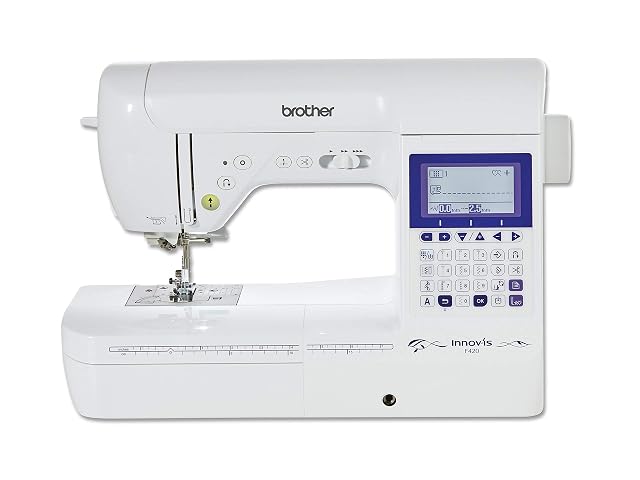
  1. Brother Innov-is F420

    140 stitches · 3.5" LCD · thread cutter

    Brother's upper-mid computerised machine: 140 stitches, ten buttonhole styles, an automatic thread cutter and a 3.5-inch screen. One reference across the whole of Europe, absent from the US.

    Best for: Garment sewing where buttonholes and finish matter more than raw power

    8.7/10

    ≈ £695 / 1050 €

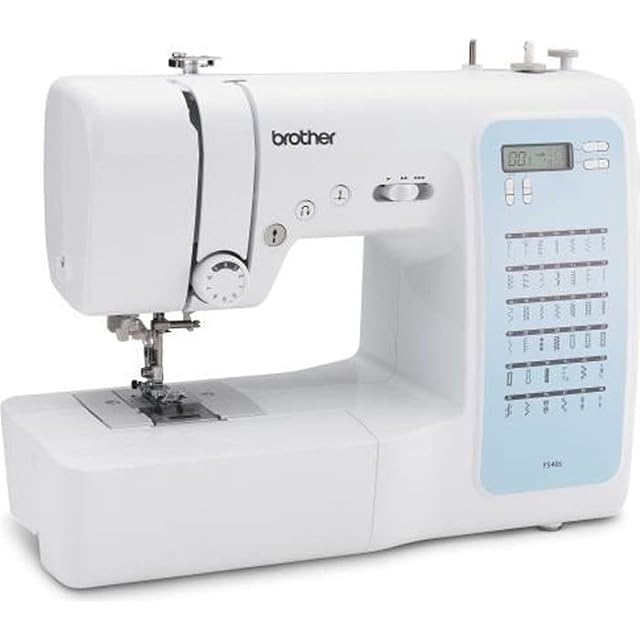
  2. Brother FS40S

    40 stitches · LCD · free arm · 2.95 kg

    Brother's light computerised machine: 40 stitches, an LCD, a needle threader and a free arm, at just under three kilos. One reference on all six Amazon stores we checked.

    Best for: Light dressmaking, alterations and a first machine that has to live in a cupboard

    7.5/10

    ≈ 200 €

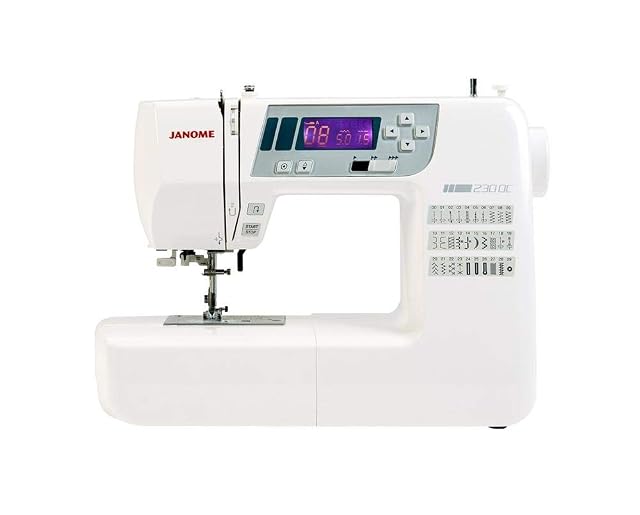
  3. Janome 230DC

    Computerised · DE, IT, GB only

    Janome's computerised mid-range machine, and the first of three Janome models we found absent from the French and Spanish catalogues.

    Best for: German, Italian and British readers who want a Janome computerised machine

    6.3/10

    ≈ £350 / 430 €

Questions people actually ask

Are decorative stitches ever worth it?

Rarely as a purchase reason. Most people use four stitches. If you genuinely do decorative work, look at the stitch width and length ranges rather than the count.

Is an automatic thread cutter worth paying for?

On a machine you use weekly, yes — it removes a repeated chore. Check it leaves a long enough tail to start the next seam, because a short tail creates a new one.

Is a computerised machine better than a mechanical one?

It is more convenient rather than inherently better. Needle up-down, speed control and automatic buttonholes are the real gains.

What is needle up-down?

The setting that decides whether the needle stops in or out of the fabric. Stopping in the fabric transforms pivoting, corners and quilting.

Do I need hundreds of stitches?

Almost certainly not. Most sewers use a handful, and the stitch count is the easiest specification to advertise.

Does automatic tension mean I never adjust it?

It handles common combinations well. Unusual threads and fabrics still need manual adjustment, and correct threading remains essential.

Do computerised machines need oiling?

Many do not, and oiling a sealed machine causes problems of its own. The manual is the authority, not general advice.

Are they harder to repair?

They usually need a dealer with the right equipment rather than any repairer. Checking one exists nearby before buying is sensible.

Why each one, and for whom

Brother Innov-is F420 · £695

For : Garment sewing where buttonholes and finish matter more than raw power

Main strength : Ten buttonhole styles — the feature that actually justifies going computerised

Main limitation : Not listed on amazon.com — US readers get a search, not a product page

Read the full review →

Brother FS40S · £200

For : Light dressmaking, alterations and a first machine that has to live in a cupboard

Main strength : Available under a single reference on all six markets we checked — rare

Main limitation : Under three kilos means a plastic-framed chassis, with the stability that implies

Read the full review →

Janome 230DC · £350

For : German, Italian and British readers who want a Janome computerised machine

Main strength : Janome's mechanical and computerised machines have a strong reputation for stitch quality

Main limitation : Absent from the French, Spanish and US catalogues

Read the full review →

What each price bracket buys

Entry level

£200 – £350

2 models

Mid range

£400 – £600

3 models

Upper range

£695 – £1 695

2 models

What you will need with it

Consumables and protective gear from the same aisle, at the price we recorded. Check compatibility with the model you choose before ordering: it depends on the fitting and the part number, which the product page states.

Deciding in one line

Useful comparisons

Head-to-heads already published between two models from this guide or this aisle.

How this guide is built

The models here come from the catalogue of this site. Specifications are those published by the manufacturer and on the Amazon product page; prices are what Keepa reported on the date below, and both move. The ranking uses declared specifications, the balance of stated strengths and limitations, and price. No product on this site has been physically tested, and nothing here claims otherwise.

Last checked on

The tool we use ourselves

Chosen your machine? Now buy it at the right price.

Sewing machines and overlockers swing by a hundred euros or more across the year, and the biggest "discounts" often land at prices the same model sold for six weeks earlier. UniverTrack tracks the real price history across retailers, spots fake reductions, and alerts you when it is genuinely the moment to buy.

Real price historyBuy-now alertsAI buying assistant
Try free for 14 days →
No commitment · Cancel in one click · 5 languages